
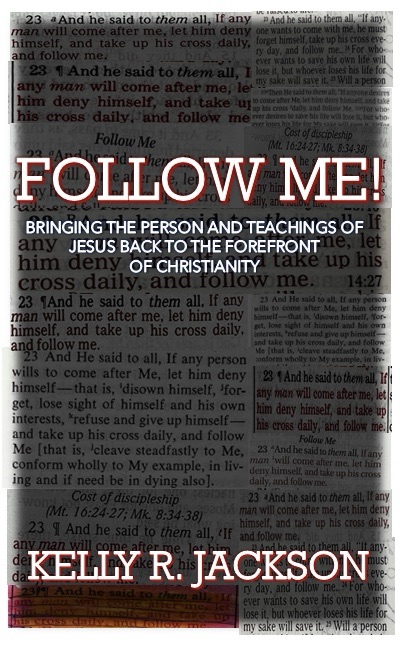
Check out this excerpt from Pastor Kelly R. Jackson’s upcoming book. Official release date is Friday January 24, 2025. To preorder a copy, visit http://www.krjpublishing.com/follow
Keep Building On Christ
One of the things that I’ll often hear from the church is our lamenting about how strong the church used to be and how people aren’t as committed as they used to be anymore. However, when I hear people say those things, I always hear them talking about how we can move forward by making even more changes, but I rarely hear people talking about studying our past successes.
Something that I think that our young people struggle with most these days, especially in the Black community, is knowledge of history and historical figures. We’ve convinced them that nothing can be gained from the past because we now have all of these new tools and gadgets, and we have access to much more information than those before us.
We’ve failed to help them to understand that because they have these tools to access information, they can actually access more information about what happened before them and learn from the past. They can learn what worked and what didn’t work. But most importantly, they can learn to tweak as opposed to seeking to destroy everything that they deem outdated. Some things you need to make wholesale changes to, but some things just need an upgrade.
If we go back into the history of our churches and see them full, vibrant, and strong, why wouldn’t we study why that was? We’ve implemented so many new things, and yet, there still seems to be a great falling away, as the Bible said there would be. If we’re so much better than our predecessors, why were they so much more committed than we appear to be? If our ideas are so much better now, why are we struggling to stay connected to the truth of what Christ called for? If we’re so much more educated about Scripture now, why are we failing to stay connected to Scripture in our approaches in the church?
I’m just convinced that God didn’t make better ways for us to be educated in the church just so that we could flex our muscles every week by showing how smart we are. I’m of the belief that God gave us new avenues for learning of Him so that we can make the church stronger, not rip out its foundations. One of the struggles between Peter and Paul in Scripture was in their coming to the understanding that God was using both of them in different ways to speak to different groups of people, but all for one common purpose.
I feel as though at times, some have decided that all that we’ve introduce in the church that’s new in the ways of preaching and teaching must be used to eliminate what’s already there, but I don’t believe that’s what God intended. It’s my belief that God may have called for a new delivery, a new way of educating, a new way implementing, and even new voices, but I don’t believe He ever wanted us to abandon the basics. No matter how we may evolve or grow, there are some things that we can never go away from if we intend for our churches to stay strong.
Consider the narrative of Paul and Apollos. We see Apollos in Acts 18:24-28 and the Bible says that he was eloquent in his speaking, and he knew the Scriptures well. He preached with enthusiasm, spirit, and accuracy, but his accuracy was based only on what he knew to that point. He still didn’t have the full picture concerning Jesus. The Bible says he only knew of the “baptism of John” which spoke of the coming Messiah, and while Apollos believed that Jesus was the Messiah, his preaching hadn’t fully changed to reflect the fullness of what that meant until Paul’s co-laborers, Aquila and Priscilla, explained the way of God to him more accurately.
By the time we get to 1 Corinthians Chapters 3 and 4, Paul has to address Apollos’ rising popularity in the church because the people had begun to “choose” Apollos over Paul, or Paul over Apollos. Paul doesn’t have to address Apollos because this appears to be the nature of the people, not the nature of the preacher. According to Scripture, Apollos is just preaching the Gospel, but as it is in human nature, people have their preferences and will often choose presentation over principles.
In this discourse, Paul makes two points that should stay with the church until the Lord returns. The first being that the ONLY foundation that matters is Christ, and building on anything else won’t last. The second being that the builder doesn’t matter because ONLY God will give the increase. No matter what our hands do, no matter how eloquent of speech we are, and even if we are the “expert builder” that God allowed to participate in the laying of the foundation, our intellect is no match or substitute for God’s involvement.
The point that Paul, and thus, Scripture makes is that the foundation has been laid by God through Christ. We can’t lay another foundation over the one that is Jesus Christ. The builders will be judged by how they added to what was laid, not by what they built themselves. The builders will be judged by their work because they were never responsible for laying the foundation. God took care of that. As builders, we’re responsible for furthering the Gospel. We’re simply workers. I know we don’t like to hear this, especially as pastors and preachers, but we don’t matter nearly as much as we think we do. If the people grow, it will be because of what God does. It doesn’t matter who planted and it doesn’t matter who watered.
As we’ve grown and gained more knowledge, we have become too dependent on ourselves. We have great ideas, but those great ideas need more than just our intellect. We’re trying to major in the spectacular while minoring in the organic. Every strong relationship got that way over time and with natural growth. The spectacular bang has never been sustainable. True sustainable church growth and the true making of disciples takes time, and I fear that we’ve started to see our great ideas as shortcuts to growth. The spectacular may get them to the building, but will it get them discipled?
It seems that we’re in constant search of the membership explosion that we saw in Acts 2:41 where 3000 were baptized, and we have no desire for the type of one-on-one encounter that Phillip had with the Ethiopian eunuch in Acts 8:26-40 where the Gospel reached just one person in a moment in time, but he was saved and that encounter impacted a nation. It seems these days that we’d rather have a conference, convention, or workshop, as opposed to just having regular and consistent Bible class so that the people can grow organically.
 KRJMinistries.org