Tag Archives: God’s grace

Your Faith Must Match Your Vision 

God is showing some people some amazing visions these days, myself included. There are businesses that He wants to birth, ministries that He wants to bring to fruition, and dreams that He wants to fulfill. The only thing that can stop us is a lack of faith, not a lack of resources. 

The Bible tells us in Hebrews 11:6 that it is impossible to please God without faith. That tells me that impossible is where our dreams die. Impossible is what will cause us to lose when we’re born to win. Impossible is a disappointment to God. Impossible shouldn’t be in our Spiritual nature because it’s not in God’s. 

Scripture also tells us that faith the size of a grain of a mustard seed can move mountains (Matthew 17:20). Therefore, if your vision is larger than a mountain, you must increase your faith even more. At the bare minimum, we should all have mustard seed faith. Just imagine what a little boost can do for you. 

Scripture also reminds us that with God, nothing shall be impossible (Luke 1:37). Therefore, we must remove that word from our vocabulary. The struggle that we have with the gap between our vision and our faith is we’re often in moments of discomfort when the vision comes.  

God shows you the business plan when you’re broke with a mountain of bills. God shows you the plan for the ministry when people are still questioning your call and your ability. God shows you the better career when you’re barely holding on to a job that you hate, but you need for your survival! Yes, God will show you the best of life when it seems that you’re at your worst points. That’s not a time to shrink in your faith. That’s when you must grow! 

I encourage those that may be reading this to see God more clearly than you see your circumstances. You could have all the money in the world, but if you lack faith, you’ll be scared to invest it in your dreams. So see the vision more clearly than you see your lack of income and/or opportunity. God will never lead you to it without a plan to feed you through it. Trust Him more than you fear failure. He’s committed to you. Increase your faith. See the vision clearly. Watch God work!

Rejecting God: We ignore much more than we miss

Did you really miss your blessing or did you just ignore it when it came? I’m a writer by nature and by profession, so I’m a stickler for words. It’s popular for us to say things to people like “You missed your blessing” when they seem to have bypassed God’s provisions. But I want to challenge that thinking, because upon further inspection, I find that we don’t miss God with anywhere near the regularity that we actually reject Him.

It’s really very simple to me. As an example, if you miss a bus, you either weren’t there when the bus showed up or you arrived as it was pulling away and you couldn’t catch it. However, to reject a bus means that you were standing there when it arrived, you knew that it would take you where you wanted to go, but for whatever reason, you refused to get on. 

Maybe it was too crowded. Maybe you didn’t like the style of the bus because it was an older model and not a brand new bus. Maybe you didn’t like the driver. Whatever your reason for not getting on, there’s no doubt about it, the bus came. You just rejected it and now it will take you longer to get to your destination.

The truth is God is always placing blessings right in front of us. The lie is that we somehow know better than God. Often, the blessing doesn’t look like we want it to look or it doesn’t come when we expected it or from where we expected it. We fail to see that God designs the blessing to fit its purpose, not necessarily to be pleasing to our eyes or our other human sensibilities. Can He design such a gift that’s pleasing to us? Of course He can. But we’ll often only see it that way when we use our vision as opposed to our sight.

The point here is this: To suggest that you missed something from God is to suggest that God’s timing is somehow off. Now, you may be saying, “Wait Rev, if I say I missed it, how am I blaming God?” Well, let me hit you with another Christian catchphrase: “He may not come when you want Him, but He’s always on time.” That says to me that if you’re early, God will be there. If you’re running late, God will be there. You can’t miss what God has for you, but you sure can reject it trying to do things according to your own understanding. 

Even if your aim is off, God’s aim is true. And even though we may miss out on some things, we won’t miss it in its entirety. But you wanna know what else is awesome about God? Even when you reject Him, He’s so full of grace, that He’ll bring that blessing back around and give you another chance at it. However, I must warn you. You don’t wanna keep ignoring God. You may find yourself stuck with your plan instead of His, and that’s a mess you don’t want. My suggestion to you? When the bus comes, don’t outsmart yourself. Your best bet is to just get on.

In search of the Holy Ghost “push back”

cropped-20130824_22091611.jpg

I only need three minutes of your time.

There’s a serious issue plaguing the local congregations. Because of this issue inside the church walls, we’ve become ineffective outside of them. Many of our communities are dying around us, and we in the local congregations are failing to do anything about it. Why? Because we’re too busy trying to kill one another inside the walls of the church.

This past weekend, our Sunday School lesson was on spiritual deliverance (Luke 8:26-39). When giving the minister’s remarks on the lesson, I stated that we in fact have many demonic spirits within the congregation that keep us from ministering outside of it. But they aren’t just spirits that are only in what we perceive as “hell raisers” in our local churches.

They’re also spirits in anyone that would seek to push hell raisers out of the church into the wilderness, rather than try and rid ourselves of the spirit that’s infected our church, while at the same time looking to save a brother or sister that may be under the influence (James 5:19-20).

2 minutes left.

Here’s what we need to know: Hell raisers are always in attendance because demonic spirits transfer (study that Sunday School text I gave). They’re dedicated to their cause because the one that influences them never takes a day, hour, or minute off.

They’re always on time, they’re always together, they’re always loud, and they always state their position. And as members of the congregation, they have the right to do so. They’re at every meeting, every get together, and every function, and they make their presence known. Even if they don’t win, you will know that they were there. It’s their opposition that’s having the trouble.

Those that oppose this spirit are too meek, too passive, too quiet, and too afraid to speak in hostile situations. They’re living their lives on hope, but not a hope that produces action. They’re being pushed, but they’re unwilling to push back.

Now understand that being “holy spirit filled” is having the ability to give the benefit of the doubt. You’ll never convince me that you’re spirit filled if you can’t do two things:

  1. Not be so ready to believe the worst that you hear about people with no real proof.
  2. Even if you know that the worst is true about the individual, you believe that God can change them.

If we really and truly want to come together, at some point, we’ve got to be more willing to trust God for real change, and less willing to base all that we are on what we feel and past events. Because that’s what spirit filled people do. They accept the fact that the worst of us can be redeemed. But that requires activity. It requires prayer. It requires forgiveness. It requires restoration. And it requires resistance to those spirits that can cause us to believe that unity can only happen on our terms.

1 more minute.

So what is the benefit of a Holy Ghost push back? When we push back spiritually, we let the enemy know that we value unity more than we do confusion, and we show that by speaking out against what’s dividing us. We let the enemy know that we care for one another more than we do our position in the argument. We let the enemy know that we care more about being right with God than we do about winning an argument. We let the devil know that we need healing inside the congregation before we can go out into a sick world and show them what healed us.

Isaiah 54:17 tells us that no weapon formed against us shall prosper, and every tongue that rises against us in judgement, WE shall condemn. This not only means that the attacks of the enemy will fail, but it also means that we have the right to speak against the attacks. We can no longer keep silent about the dangers in the world, but we can’t help any of that if we refuse to speak against the dangers right at home.

I challenge anyone that’s being overrun by demonic spirits within your local congregation to spiritually push back. Not against the individuals that may be affected, but against the behavior. Push back against opposition that exists for the sake of opposition, and not for a defined principle or ideal, backed by Scripture. Push back against that spirit because that’s your true enemy, not the person you’re focusing on. Meek doesn’t have to mean weak. Find your push back!

Practicing what we preach: Preachers have a different set of responsibilities, not rules

FullSizeRender (1)One of the great challenges of true leadership is walking the talk. Not just giving instruction, but being willing to follow that which you’ve laid out for others. And in the event that those rules don’t apply to you, showing that you are following the ones that do apply to you. This is especially true when it comes to preaching and pastoring. In fact, we are the basis of that popular phrase “Practice what you preach”. It’s so vitally important that we’re living by that principle because people in their flesh are often unable to look beyond God’s representative and see Him for themselves.
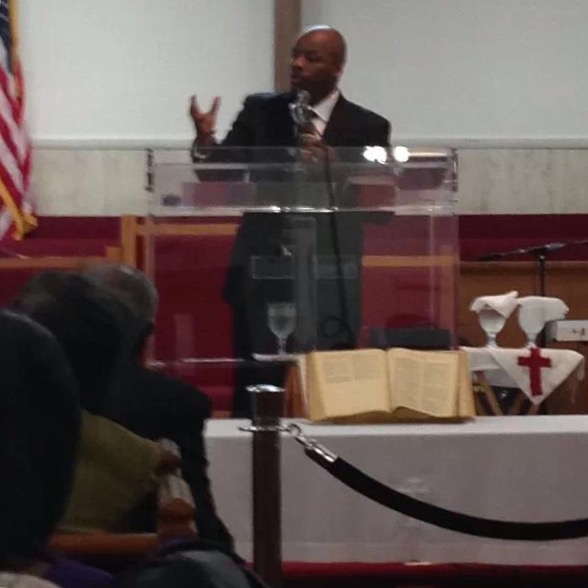


It is through the preacher that many are introduced to God. While we can’t save, we can point people to The One who does. Because of this, our jobs are more critical than any other within the body of Christ (Note: The importance is on the job, not on the individual doing the job). While we have been blessed with such a great call, we have not been given the free pass that many, both within and outside of the ministry, think we have. We have not been given a special rules exemption by God. This responsibility is sacred and it must be treated as such. Though we throw that catch phrase around rather loosely, “Practice what you preach” is probably the most important mandate available for any minister of The Gospel.

The human side of a preacher or pastor can often affect the spiritual call that he’s under. For example, if there’s anything that bothers us on our 9 to 5 jobs, it has to be higher ups operating by a different set of rules. I mean, doesn’t the employee handbook apply to everyone? Don’t we all work for the same company? I know you’ve gotten a few promotions, but rules are rules, right? Well, not always.

If you’re working a secular job for a number of years, you get comfortable. You’ve gotten a few raises, a few promotions, and you’ve got a little seniority. Just as it is on a secular job, the longer you’ve been doing it, the more comfortable you feel cutting corners and not following all of the rules to the letter. Now, if you’re blessed enough to have a few subordinates, you won’t allow them the same latitude (unless, of course, you have some favorites, which we all do). You make sure that the people “working under you” abide by all of the rules as stated. And if you’re ever questioned by them about the obvious double standards, you remind them of how long you’ve been doing this, what your title is, who their immediate boss is, and the fact that you’re in good with the big boss, so you’re privileged. Does this sound like church to anyone yet?

A preacher or pastor can’t in good conscience stand in the pulpit and instruct the people of God in the rights and wrongs of Christian living, and then act as though he is above the law. People in church can spot a hypocrite from a mile away. Even as they say “amen”, they’re still aware when you don’t practice what you preach. In fact, they lose respect for you. Not because you’re not perfect, because they already know that and they’re not afraid to tell you. They lose respect because you’re acting as if the rules don’t apply to you. You lose credibility and the ability to correct them because if you can pick and choose what to follow, why can’t they?

Nowhere in the qualifications for a Bishop (1 Timothy 3:1-7) were we issued a different Bible. The same Bible that applies to the “layperson” applies to the pastor and preacher. We all have the same rules about adultery, fornication, gossip and backbiting, forgiveness, etc. God meant those words for all, no matter what your position in the church.

People are turned off from traditional churches because some of our pastors and preachers act as though they’re above the Bible. But it’s not God that’s behind this elevation, oh no. It’s often man’s ego, coupled with members and their hero worship/groupie mentality. When I published my book “An Understanding with God”, the original premise was dealing with preachers and pastors that behaved as though having a greater understanding of God’s Word gave them leeway that other Christians didn’t have with God concerning sin.

Now, I don’t want anyone to get this wrong. Understand that both the pastor and preacher are under a special anointing from God. They have been called to a greater work. It is a work not to be taken lightly, nor disrespected. The Bible states in both 1 Chronicles 16:22 and Psalms 105:15: “Touch not mine anointed, and do my prophets no harm”. However, those scriptures are in reference to the mistreatment of the prophets, not godly correction. None of us are above that. In truth, the fact that we’re called to a greater calling doesn’t alleviate our responsibility to live according to God’s Word. It increases that responsibility.

Preaching has enough challenges without we preachers acting as though The Word doesn’t apply to us. There’s automatically an expectation of “holier than thou” placed on us as soon as we accept the call. People believe that because we’re preachers and pastors, we’ve somehow been given some supreme ability to avoid sin. They assume that the devil won’t attack us because God is covering us. They began throwing our past around like its current events. They forget our humanity.

While there’s nothing we can do about people’s unrealistic expectations, we can do something about the idea that we don’t have to serve the same God that they do, under the same ordinances listed in His Word. We can be sure that people understand that our call doesn’t make us exempt from God’s orders for the Christian community as a whole. We can practice what we’ve been called to preach.

All of the teaching and preaching that we do on love, forgiveness, keeping God’s statutes, and overall Christian conduct should serve as a reminder to us first, before it becomes schooling or a corrective measure for those we’re charged with leading. Every word in our lessons, sermons, lectures, and Bible classes should sting us first. If we aren’t living what we’re teaching from the Bible, each word that we speak should be a bitter taste in our mouths until we’re trying our very best to do so.

We must remember that we don’t preach so that people can see how great we are, but so they can see how great our God is. We aren’t to preach a word of chastisement with a tone that suggests that we’ve somehow conquered sin. We ought to speak as though we’re beneficiaries of God’s grace and mercy, just like the people we’re speaking to.

This isn’t a call for you to be overly critical of the preachers or pastors that you know (remember 1 Chronicles 16:22 and Psalms 105:15), but you should be concerned when they’re aware of everyone else’s shortcomings, but blind to their own, particularly when they’re obvious. The easiest way to lose people is to tell them to do something that they know you should be doing to, but you’re not. We can’t be “do as I say, not as I do” preachers. We must be a living and breathing example of the Gospel of Jesus Christ, and not just a shadow.

The blessings in “all things”

FullSizeRender(2)How thoroughly do you read your Bible? Do you skip over words that seem insignificant, but in fact, they hold some significant power in the verse? We’ve all done it before. We look for the most majestic words in a sentence, all the while overlooking the strength that God has hidden in the small and seemingly unimportant. By simply taking the Bible word for word, you can receive the fullness of what God has to say to you.

Look at Philippians 4:13: “I can do all things through Christ which strengtheneth me”. Now, we all know that there’s power whenever Christ is mentioned in the text. However, once we get beyond Jesus, we often seek the power in the words “I can”. Yes, it’s in our human nature to focus on what we can do. However, when we do that, we often miss “all things”. Sometimes we misunderstand and misapply it, while other times we overlook its significance. We often see “all things” as an opportunity. We see it as God blessing us with gain. Also, “I can do all things” becomes a battle cry against those that oppose us or in instances where we’re trying to achieve things. But we often miss the entire blessing in the words “all things”.

These two words cover a multitude of things. We must remember that doing all things through Christ covers things beyond what we desire for our material growth. Those words also cover our healing. They cover grief when you feel like you can’t make it through. They cover broken homes and financial hardships. They cover wayward children. And yes, they cover church dysfunction and spiritual growth. Yes, when that scripture tells us that we can do all things through Christ, it really means all things!

One of my pet peeves is Scripture being taken out of context. All of us have been guilty of pulling Scripture out just to make a point, while not really considering the context in which it was spoken. Philippians 4:13 falls into this category. We see that we can do all things, but we don’t go back a few verses to find out exactly why the Apostle Paul was making this statement.

An examination of the Book of Philippians provides some insight. Paul, writing this letter to the church at Philippi from jail, is still rejoicing in The Lord. In the midst of his circumstances, he remains confidant in Christ! Sometimes we struggle to look past our circumstances to the God that controls it all, but as Christians we must always look to Christ rather than focusing on the bars that imprison us. If we aren’t trusting God in all things, we begin to focus on our limitations, and not His power.

By Philippians 4:11-12, Paul tells us in those verses that he has learned that Christ sustains him, no matter what his situation may be. Whether he’s rich or poor, hungry or full, or whether he’s high or low, he knows that Christ is his strength. This gives us the proper perspective. Does this verse apply to our various quests in life to be prosperous or to overcome our adversaries in life? Yes, it does. But we must also remember that this verse is a survivor’s verse. It’s a verse that reminds us that no matter what we may face in life, we can conquer it through Christ (also see Romans 8:35-39)!

Scripture also tells us in Philippians 2:5: “Let this mind be in you, which was also in Christ Jesus”. So we can’t trust God in “all things” with the mind of the unsaved. When we fail to look to Jesus in all things, when we lack the faith that God can bring us through all of the situations that we face in life, we are thinking with an unsaved mind. Not to suggest that you are unsaved if you lack confidence, but you’re engaging in unsaved thinking.

Its human nature to have fear and anxiety in certain situations, but we as saved Christians ought to have a new nature. We ought to be different. We ought to have a change in our mindset. A change that will allow us to see things in the spirit, not the flesh. Keep 2 Corinthians 5:17 in your hearts: “Therefore if any man be in Christ, he is a new creature: old things are passed away; behold, all things are become new”. Not some things. Not a few things. Not the things that we thought we couldn’t outrun. No, if you’re in Christ, ALL THINGS become new!

Laboring in vain: Our work is ineffective without God

Old-NewUnless The Lord builds the house, those who build it labor in vain.Unless The Lord watches over the city, the watchman stays awake in vain. It is in vain that you rise up early and go late to rest, eating the bread of anxious toil; for He gives to His beloved sleep – Psalms 127:1-2 (ESV)

One of the most dangerous thoughts to ever enter the mind of a Christian is that of self-reliance. The idea that we can actually do something on our own. The idea that we alone can rise above issues, situations, and circumstances. The idea that if we can do things to our own level of satisfaction and by our own standards, we can somehow achieve a level of happiness that goes beyond what God can provide.

This attitude is often what shapes our prayers. It causes us to try and order God around as opposed to seeking His plan for our lives. We’re more concerned with our wishes and our desires than we are with the spiritual order of things. However, the scripture at the heading of this lesson tells us that a spirit of self-reliance is an exercise in futility. We know that God is there, but are we remembering why? In fact, it is the idea of self-reliance that will drive us crazy because we will inevitably come upon a situation that is beyond our control. If you’re only relying on self, what will you do in these moments?

Any act without prayer and acknowledgment of God is an act without real hope. For with everything WE attempt to put into place, we attempt to eliminate God. The reference “in vain” in our text speaks to something that is ineffective or improper. Therefore, to do anything without first seeking God’s guidance and blessings will be ineffective and improper. Where we often miss the mark is in falling in love with initial or temporary successes. Something works once, twice, or maybe even more without seeking God and we assume that it will work all the time. In our flesh, we seek that instant and immediate gratification, and not the long-term promises of God that those who are spiritual are seeking.

This particular text is stressing to us the importance of keeping God at the head of all that we do. It’s great that concerned citizens (the watchman) want to keep watch over their cities. But who are we counting on to cover the watchman? When we live in a society that has become not only anti-prayer, but anti-God, how can we expect things to remain peaceful and orderly? When we would rather rage than pray, what will the outcome be?

Your Christianity can’t only be skin deep and situational. You can’t look in the face of the evil in the world and say that you’re tired of praying and you’re now ready for revenge. Scripture tells us that we should never cease praying (Luke 18:1, 1 Thessalonians 5:17), but we only seem to believe that during times in which we’d like a blessing. But what about during times of death? What about during times of immorality? What about during times of destruction? What about praying to God just because He is God?

Look at our text today and look at how we’re conducting ourselves in society. There can be no real activism without first activating our faith in God. There can be no “grinding” for a better life without Godliness. There can be no peace without The Peacemaker. There can be no healing without The Healer. If God isn’t at the head of whatever it is that we’re doing, it will fail. Let me simplify: we will fail without God, but God Himself will never fail without us.

No matter what problems we may face in life, God is capable of delivering us from them all. If we face them alone, it is simply because we have chosen to. However, as this scripture tells us, to face them without God is to face them in vain. You can work all the days of your life, but if you haven’t placed God over your finances, your labor will be in vain. No matter how much you have, it will never seem to be enough. If you refuse to bless God with just a portion of what He has already blessed you with, you will find that what you have will disappear without explanation (Haggai 1:5-7). It is through God that we find the value of life, not the price of it. After all, Jesus has already paid the price for our lives (1 Corinthians 6:20). The cost was much too high for us.

This Scripture tells us that if God doesn’t build our house, we that do build it are doing so to no avail. This doesn’t just include your physical house, but also your spiritual house (1 Corinthians 6:19). What this says to me is that God must be at the foundation of what we do. If He’s not the foreman of the project that is our lives, the structure itself is for naught, constantly on the edge of implosion.

We must always remember that God is a provider to His children. Whatever we have need of, He will supply according to His will. If you’re hungry, He will feed you. If you’re struggling with a load, He’s there to help you carry it. If you’re grieving, He’s the best shoulder to lean on. And if you’re weary, He will give you peaceful rest. It makes no sense for us to stay up toiling day and night for material possessions or out of fear of what man can do to us. We mustn’t be weary in our well doing, so we must continue to stand and work for what is right. But we can never accomplish anything without acknowledging the God that owns it all.

Protection and provisions: Exploring the beauty of Psalm 23

Old-NewMany Christians lean on Psalm 23, and for good reason. One of the most popular passages of Scripture in the Bible, it shows God’s leadership, His protection, His provisions, and His blessings. While we often recite this Psalm, many fail to see the depth of it. Let’s examine it verse by verse and witness just how beautiful and encouraging this passage of Scripture is.

Psalms 23:1 – “The Lord is my Shepherd; I shall not want”

Immediately, we see that God is a provider. However, this verse doesn’t tell us that we won’t or shouldn’t have any desires. God has promised to give us the desires of our heart, as long as they don’t collide with His will. Instead, this verse reminds us that when God is our guide, we will have all that we need. Not only does a good shepherd care for and provide for his sheep, he’s even willing to risk his life. When we consider the sacrifice of Jesus Christ, the Good Shepherd, we see just how much God loves us (His sheep).

Psalms 23:2 – “He maketh me to lie down in green pastures: He leadeth me beside the still waters”

Look at where God leads us to rest (lie down): green pastures and still waters. Consider those green pastures, as opposed to desert places or a wasteland. Green pastures is representative of fertility. It is representative of life! If the place where God led you wasn’t healthy, the grass would be dying. We often focus too much on our wilderness experiences without considering the places that God wants to lead us to.

And what do we think of when we sit down by still waters? We think calm. We think peace. When we consider the fertile ground and the still waters, we see that God wants to calm all of the raging waters of our life and bring us to a place of peace and growth!

Psalms 23:3 – “He restoreth my soul: He leadeth me in the path of righteousness for His name’s sake”

The restoration of the soul is key. Consider what it’s like for us when it seems as if everything is weighing us down. Consider what it’s like when we feel like giving up. It is God that comes to our rescue and uplifts us. When the world is beating us down, only God can restore us.

Like the good shepherd that He is, God will only lead us in the right way, to the right destination. As we toil in life looking for the right path on our own, God is willing to lead us there as long as we’re willing to follow Him. We must remember that sheep aren’t the most intelligent animals, and they often wander off on their own, getting into dangerous situations. Following our Shepherd will help to avoid such things. When we’re going through struggles in life and every path seems to lead to hurt and disappointment, we must remember that such things are not of God and are not His plan for our lives. He wants greater for us. We must follow the Shepherd.

“For His name’s sake” reminds us of the promises of God. He makes good on what He said because He has a reputation to uphold as a loving and kind God that takes care of His children. God has repeatedly said in His Word that He would never leave nor forsake us. He keeps His word, but not just to impress us, but to show exactly who He is.

Psalms 23:4 – “Yea, though I walk through the valley of the shadow of death, I will fear no evil: for thou art with me; thy rod and thy staff they comfort me”

God takes no days off. He’s always there in times of trouble. When we consider “the shadow of death”, we must understand that death is ever present. In the flesh, we have a fear of the unknown, and death is in fact something we know nothing about in the physical. But when we’re spiritually born again, we have victory over the grave. In those moments of weakness, when we find ourselves fearing death, we see that God is present to comfort us.

Even in times of evil, when death is all around us, we should never be afraid. In the times when loved ones are leaving us more often than we’d like, we should be looking to God as a comforter. We should never allow ourselves to believe that God has made a mistake or that the devil has done something outside of God’s control. The moment God loses control of any situation, He ceases to be God, and that hasn’t happened. Instead, we are to trust God when we don’t understand His will, and look to the comfort He provides to make things easier.

Psalms 23:5 – “Thou preparest a table before me in the presence of mine enemies: thou anointest my head with oil; my cup runneth over”

Here is why we should never concern ourselves with those that are against us or speak ill of us. God will exalt you in due time, and He will do so in a way in which your enemies will see it. “A table in the presence of mine enemies” tells us that we’re at a feast where our enemies are in attendance. Don’t be surprised when you’re in the same room with them. God wants them to be a witness to your elevation and celebration.

But we mustn’t be arrogant. It’s not so that we can gloat or boast, but so that God may be glorified. Revenge is God’s business. When we seek it on our own, we’re out of order. God has a way of showing those that mistreated us that He has in fact favored us.

He shall also anoint us and bless us in a way that will leave no doubt that we are chosen, blessed, honored and protected by Him. God’s anointing us in front of others is a verification. Again, we are blessed for all to see! Our blessing are so great, that they run over! They will be so abundant that we won’t be able to contain them. Such blessing are not given for selfish reasons, however. An overflow of blessings is given so that we can bless others.

Psalms 23:6 – “Surely goodness and mercy shall follow me all the days of my life: and I will dwell in the house of the Lord for ever”

This brings us full circle in this Psalm. Goodness and mercy will follow us as long as we follow the directions of our Good Shepherd. Consider the fact that mercy is God not giving us what we deserve, because at times, we’re outside of His will. When we as sheep go astray, God isn’t always looking to punish us, but rather show us mercy and lead us back into the fold. Man holds a grudge, but God holds us close to His heart. Staying with the Good Shepherd ensures that we will be under God’s goodness and mercy. And we should all have the desire to dwell in the house of the Lord (in His presence) forever. There is no place safer than that!

Are you running your race: God provides all of us with the opportunity for success

Old-NewAt one point or another in life, we find ourselves in a mad scramble to be what man has deemed a success. We watch television or look on social media, see what someone else has, and then begin envisioning what it would be like for us to have the same things. But as Christians, have we really considered what God has to say on the matter?

Whenever I teach on prosperity, I remind people that God has a different idea of success. We see material, God sees spiritual. We see a piece of the pie, God sees peace of mind. I recently stated on my radio show that success is a relative term. For someone that’s been poor all of their life, it may be money. For someone that’s been sick, it may be health. For someone with an addiction, it may be being clean and sober. All these things matter, and yet, they can seem elusive as well.

When looking at Ecclesiastes 9:10-12, I find that success isn’t always within the grasp of our own abilities. Sure, God has blessed us with said abilities, but we’ve all seen or known of someone that doesn’t seem to have lived up to their capabilities. We’ve all known people that seem to be well short of what they’re able to be. And the truth is, some of us may not be all that our abilities suggest we should be. But know that God wouldn’t give you the ability, without giving you the opportunity to utilize it. As we go through these verses, we will see that God will open the doors of chance, no matter where we are in life.

Let’s analyze the text:

10 Whatsoever thy hand findeth to do, do it with thy might; for there is no work, nor device, nor knowledge, nor wisdom, in the grave, whither thou goest

In its simplest terms, this verse is telling us to work to our strength and ability while we yet have time. The popular phrase is stated “Don’t put off until tomorrow what you can do today”. We often assume that we have time to do things, but how is it that we reach this conclusion? How do we know how much time we really have? (We’ll discuss this thinking when we get to Verse 12)

God wants us to know that we can’t do any work in the grave or beyond it. We must use all of the strength (might) that we have now to do whatever work needs to be done. Our earthly abilities have no value after we leave earth. We must take advantage of the life, health, and strength that God is giving us right now.

We often take the strength of our youth and use it to “live”. But as we wind down and aren’t capable of doing the things that we used to do, we then want to serve God from our seats. Well, God needs a youthful and energetic Christian, as well as a seasoned saint that can serve mentally when they can no longer do so physically.

11 I returned, and saw under the sun, that the race is not to the swift, nor the battle to the strong, neither yet bread to the wise, nor yet riches to men of understanding, nor yet favor to men of skill; but time and chance happeneth to them all

One of my pet peeves with Scripture is misquoting and misapplication. This particular Scripture is one of the most misquoted Scriptures in the Bible, particular because of one portion. If you think about it, we’ve often heard this Scripture quoted in sermons, by people, and most definitely is song as “the race is not given to the swift nor strong”. Now, it seems like a small thing, but we must consider what Scripture is and its purpose before we go rearranging and even leaving out words. Scripture is God speaking to man and telling us through His Word how He expects us to live. Adding or taking away anything can confuse the message.

If I tell you that the “race is not given to the swift nor strong”, you become focused only on the race that you’re running. However, if I tell you, as Scripture states, that “the race is not given to the swift, nor the battle to the strong”, you’re aware that there will be a race and a battle. When this Scripture gets twisted, we’re prepared to run, but not to battle. This is why the devil loves a misquoted Scripture because it keeps us unprepared. You can’t properly apply what you don’t fully understand.

Once we do understand the Scripture in full, we can then apply what it’s saying to us. This 11th Verse keeps us focused on what it is that God has for us. Too often, we’re looking around at others that seem to be moving at a faster pace than we are, or they seem to be in a position of power that we desire for ourselves. However, we must continue to run the race that is before us. We must prepare for the battles that we have to face.

Additionally, people that seem to be faster than we are or stronger than we are, aren’t necessarily doing better than we are. God wants us to understand in this verse that what is for you will be there as long as you’re moving at your designed pace. We are required to do what God has designed us to do, and as long as we stay in that mode, the end of this verse tells us that time and opportunity will present itself. By running your own race and staying in your own lane, you will be prepared when presented with both.

12 For man also knoweth not his time: as the fishes that are taken in an evil net, and as the birds that are caught in the snare; so are the sons of men snared in an evil time, when it falleth suddenly upon them

Here, we find a conclusion to the thoughts stated in Verses 10 and 11. We have to remain focused on our task because we have no idea when our last day is upon us. I’ve often taught in Bible class that God gives us as much time as we need, no more, no less. This is why it bothers me when I hear Christians state that God took someone from physical life to death too soon. It’s an emotional statement that suggests that God makes mistakes, that He somehow doesn’t know what He’s doing, or that something is happening that is beyond His control. Death may sneak up on us, but it never will on God.

Also in this verse, death is discussed in unflattering terms. Fishes caught in an “evil” net. Birds caught in a “snare”. The sons of man “snared in an evil time”. This verse reminds us that death is at times unexpected and even unsettling. We’ve all been caught off guard by the way a person dies. This is what causes us to say things like “too soon” or “this isn’t of God”. But what this verse was designed to do is remind us that death can be sudden, and therefore we must really consider Verses 10 and 11.

It concludes that thought that we must live while we can. We must work on whatever gifts God has given us while we can, and do it to His glory. We must work to the level of our own strengths, and not to what we perceive others to be doing, because God will present us with opportunities for success in due time. It doesn’t matter how strong, gifted, intelligent, or financially blessed we are. If we fail to take advantage of the time and opportunity that God gives us to succeed, it won’t matter and we’ll fail to see success that matches what we were blessed with.

Also, we must forgive while we can because Verse 12 tells us that death can come upon us suddenly and we may not have as much time for reconciliation as we think. We must be willing to live in the moment as God has prospered us. Be active in our God-given abilities, not merely spectators of others. Not only is God able, but He’s made us able as well.

What are you really carrying into 2015?

textgram_1419815281

As we close out the old year and head for the new one, I’m seeing a lot of posts on social media and hearing a lot of talk from people about showing some people something in 2015 (usually a perceived hater or someone that they don’t like). Here’s what’s interesting about that: In order for us to show someone “something”, we would have to pray for their downfall (because God reveals our successes in His own way). Most times, we want to prove something to people in authority or people we perceive to be above us, whether they deserve to be above us or not. But in order to prove it to the point that they’d actually care, the person we’re proving it to would have to suffer loss. In this scenario or mindset, if they’re to see your elevation, they’d have to be beneath you. However, there’s a catch to this manner of thinking.

Successful people don’t really worry that much about other people’s success. They’re too focused on what they’re doing to try and “prove” anything. They’ve already proven it. And know that success is relative. To some, it’s money and possessions. To others, it’s a happy and healthy family. To some, it’s a great relationship with God. And there are still yet some that see having all of these elements as success. Either way, to truly be successful and be right with God, we can never wish for our success in someone else’s failure.

To take this a step further into the spiritual, blessed people are so busy basking in God’s blessings, grace and mercy, they have no reason to wish ill on anyone in order to feel more blessed. They realize that such an attitude can cancel out God’s blessings. I know that Scripture tells us that God will make our enemies our footstools, but we need perspective. Everyone that disagrees with you or won’t do what you want them to isn’t necessarily an enemy, and thus, God won’t make them your footstools. Some disagreements are just that. Disagreements. We don’t have to use these small differences as an emotional launching pad into the next year. Your desire to be a better you for the upcoming year should have nothing to do with proving anything to anyone other than you.

Scripture also tells us that it is the prayers of a righteous man that availeth much (James 5:16). What that means is that you must be righteous in your prayers to receive God’s blessings in their fullness. You can’t go into 2015 or any day in any other year with so much animosity towards your fellow man that you wish failure upon them in order to be elevated. This is the enemy’s plan to keep us at odds with one another. Once we know who we’re fighting, we can stop fighting one another. Once we realize that no matter who’s against us, God is for us (Romans 8:31), we’ll realize that it isn’t worth it to wish ill on one another. Just know that God can’t be for you if you’re against another one of His children. He can only be for you when you know who your real enemy is (Ephesians 6:12)!

We simply need to walk with God into the next day and the next year. Let Him do the promotion and demotion. Let Him do the planting and removing of people from your garden. And most of all, if you have ill will toward your fellow man, ask Him to remove it, not for 2015, but ask Him to do it right now!

The lesson here is that it’s alright to wanna come up, but you should never want for your come up to be at the expense of someone else’s downfall, whether it be through your actions or your wishing. We often list the things that we claim we’re not carrying into the New Year, and all the while, if we have this “I’ll show them” mindset, we’re carrying anger, bitterness, grudges, and a spirit of revenge. We want to destroy others because we feel destroyed by the fact that certain relationships didn’t work out. However, Scripture also tells us that when we set traps for other people, whether physical or spiritual, we are actually setting those traps for ourselves (Psalms 35:7-8). Something to keep in mind as we plot emotional revenge on the people that we feel have wronged us in 2014.

What God has for you really is for you, and He doesn’t have to downgrade anyone to upgrade you. Just a reminder in case you see yourself coming up in the next year, but you also see your “enemies” climbing too. Don’t be confused. God’s got enough for all of us.

So we know who you’re rooting for in 2015. The question is, who are you rooting against, and how do you expect God to bless that mindset?

The joy inside your tears

Old-NewSubject: The joy inside your tears

Text: 2 Corinthians 12:6-10

Rev. Kelly R. Jackson

3 Thoughts to consider:

  1. Spiritual humility
  2. Consistent prayer life
  3. Favor in spite of your weakness

How often do we really equate humility with godliness? While it may seem to be the perfect match, many people struggle with understanding why God humbles us and how we are blessed because of it. Humility requires submission. It requires keeping a low profile at times. It requires us to lean on God and ignore what we think. This particular text speaks to God keeping us all in check, sometimes physically and always spiritually.

The Apostle Paul is discussing with us how we should handle ourselves when we’re facing situations that aren’t the best. Who do you turn to when you’re weak? Where do you look to when it seems as if the devil is attacking you? When you’re attempting to walk in the ways of The Lord, how do you deal with the fact that something always seems to be weighing you down, causing you pain or just making you feel like giving up? According to this text, you can find joy in the midst of your trials.

Spiritual Humility

6 For though I would desire to glory, I shall not be a fool; for I will say the truth: but now I forbear, lest any man should think of me above that which he seeth me to be, or that he heareth of me 7 And lest I should be exalted above measure through the abundance of the revelations, there was given to me a thorn in the flesh, the messenger of Satan to buffet me, lest I should be exalted above measure

When we examine Verse 6, we see that at times our fleshly desire is to exalt ourselves, even above the God that we’ve prayed to for whatever blessings or gifts that we have. But such thinking is foolishness. We should resist this mindset, lest other people begin to follow us and do the same thing. Whether we’re preaching or teaching the Word of God, our desire should be that man sees all of God and none of us. We’re so flawed that it would be spiritual injustice for anyone to ever give us credit for what The Almighty has done.

This is also where we get into itching ears (2 Timothy 4:3-5), where people love man’s message rather than God’s. The Apostle Paul is writing about speaking the truth. This truth means that it is not a watered down version of the gospel. It is not a message that always feels good or does not include teaching about sin and man’s involvement in his own downfall. However, as you will see when you study those Verses in 2 Timothy, we often run from the truth of God’s Word, looking for a message that suits our fleshly desires.

It shouldn’t be a preacher or teacher’s desire to sting you with the Word, but if that happens, they shouldn’t pull back. The loyalty of the called is to God. This is where the man or woman of God can either rise or fall. He can choose to deliver a crowd-pleasing message that gains him the adoration of man, or he can choose a God-pleasing message that may offend some, but will garner him favor with God and possibly point someone toward salvation.

Looking at Verse 7, Paul’s thorn in his flesh could’ve been a physical or a mental “thorn”. Maybe he was tempted of the devil by some weakness he was attempting to overcome. Or maybe it was a physical ailment, possible a visible one, that caused him to be self-conscious. Though he was called of God, Paul was still in his flesh and he no doubt was superficial at times, just as we are.

A study of Paul does reveal that he had some visible physical ailments. Either way, this “thorn” was there lest he began being too arrogant. However, Paul knew that he needed to pray about his condition. An ailment that keeps us in prayer, whether it’s physical or mental, keeps us humble and keeps us in the knowledge that we need God. In all of His wisdom, God knows that some people suffer from spiritual arrogance and would never pray unless they had an issue or a need. And in the event that everything was okay in their lives, they would take credit for the peace He has given.  

Consistent prayer life

8 For this thing I besought The Lord thrice, that it might depart from me 9 And He said unto me, My grace is sufficient for thee: for my strength is made perfect in weakness. Most gladly therefore will I rather glory in my infirmities, that the power of Christ may rest upon me

How often do you really pray? In the 8th Verse, Paul talks about going to God three times about his condition. It’s not as though God is unaware or hard of hearing, but we still must approach God concerning our needs. Again, this requires humility. It requires us to submit our requests to a higher power, one that can supply what we need.

Another key component to this prayer is our understanding that God may deny a prayer request to fulfill His divine purposes. Whatever you’re dealing with is actually in God’s plan for purposes you may not understand yet. This is where His grace comes in.

Grace is God’s unmerited favor. What does that mean? Well, we aren’t worthy of God’s favor. We’re saved by His grace, even though we don’t deserve it and can do nothing to earn it. It is by His grace that we’re able to endure the tests of life. We aren’t even worthy of going directly to God in prayer. However, we have Jesus as our great intercessor. Through Him, we receive God’s grace. Not because we are worthy, but because Jesus has made the sacrifice of His life.

Through God’s grace, we are strengthened. If we never had a weakness, how would we ever know how mighty our God is? This is why Paul says “I rather glory in my infirmities”. He understands that God will enable him to do great things, despite his conditions (this is the true application of Philippians 4:13). He understands that as he goes through, it is God that gets him through. Knowing that God is the wind beneath your wings enables you to soar to greater heights!

We should never assume that God only chooses the “perfect” man to do His perfect will. In fact, God has often chosen the imperfect so that we all can understand that we can be a part of Kingdom building. Verse 9 speaks to that grace of God. It is all we need, even in the midst of physical and mental imperfection. We can find joy inside our tears each time the devil attacks us. When we go to God in prayer, we shouldn’t be reminded of how big the problem is. We should be reminded of how big our God is.

Then Paul speaks about the power of Christ resting upon him. 1 Peter 4:14 says: “If ye be reproached for the name of Christ, happy are ye; for the spirit of glory and of God resteth upon you: on their part He is evil spoken of, but on your part He is glorified”. Therefore, if we’re enduring difficult times in the name of Jesus, we ought to count it joy. You wouldn’t be under attack from the enemy unless the Spirit of God was within you. As Jesus said, Satan can’t cast out Satan (Matthew 12:25-28). So if you’re already under the devil’s control, there’s no need for him to attack you.

Favor in spite of your weakness

10 Therefore I take pleasure in infirmities, in reproaches, in necessities, in persecutions, in distresses for Christ’s sake: for when I am weak, then I am strong

Never place all of your focus on what makes you weak if you aren’t going to look to what makes you strong. Every bit of drama in our lives should point us right back to Christ. Research Romans 5:3-5 and you’ll find that trials bring about patience. Through trials you’ll be better able to deal with difficult situations and difficult people, all because the power of Christ is within you.

Going through tough times in life is difficult when you’re going through them for yourself because we can’t adequately strengthen ourselves. But when you’re going through them for Christ’s sake, you can take pleasure in them. Jesus laid down His life for you. He has already come to your rescue by redeeming you to the Father. Don’t think that He won’t come to your rescue again. Consider all that He went through for us and you’ll realize that what we go through for Him pales in comparison. The reward for what you do for Christ is the gift (because we can’t earn it) of eternal life.

Conclusion…

The Christian should never have a “woe is me” attitude. This can be difficult to manage at times because we’re still in the flesh. This is why I encourage Bible study so much, rather than just church attendance. The Word of God is a guide when you’re lost and strength when you think you can’t go on. You need to lean on it daily and move away from your flesh (Proverbs 3:5-6).

It is God’s grace, His Word and the Holy Spirit that can keep us from losing our focus when it seems that a little situation here or there is getting out of hand. In tough times, you have to trust God more than you trust yourself. The Apostle Paul gives us a powerful lesson in both humility and strength. It’s a reminder that if we lean on God, no matter what the financial situation, physical situation, mental situation, spiritual situation or church situation may be, if we go to God in prayer concerning that “thorn”, even if He doesn’t remove it, He will be there to help us to bear it. And isn’t that all we need when the load gets too heavy?