Tag Archives: God’s Provisions

Rejecting God: We ignore much more than we miss

Did you really miss your blessing or did you just ignore it when it came? I’m a writer by nature and by profession, so I’m a stickler for words. It’s popular for us to say things to people like “You missed your blessing” when they seem to have bypassed God’s provisions. But I want to challenge that thinking, because upon further inspection, I find that we don’t miss God with anywhere near the regularity that we actually reject Him.

It’s really very simple to me. As an example, if you miss a bus, you either weren’t there when the bus showed up or you arrived as it was pulling away and you couldn’t catch it. However, to reject a bus means that you were standing there when it arrived, you knew that it would take you where you wanted to go, but for whatever reason, you refused to get on. 

Maybe it was too crowded. Maybe you didn’t like the style of the bus because it was an older model and not a brand new bus. Maybe you didn’t like the driver. Whatever your reason for not getting on, there’s no doubt about it, the bus came. You just rejected it and now it will take you longer to get to your destination.

The truth is God is always placing blessings right in front of us. The lie is that we somehow know better than God. Often, the blessing doesn’t look like we want it to look or it doesn’t come when we expected it or from where we expected it. We fail to see that God designs the blessing to fit its purpose, not necessarily to be pleasing to our eyes or our other human sensibilities. Can He design such a gift that’s pleasing to us? Of course He can. But we’ll often only see it that way when we use our vision as opposed to our sight.

The point here is this: To suggest that you missed something from God is to suggest that God’s timing is somehow off. Now, you may be saying, “Wait Rev, if I say I missed it, how am I blaming God?” Well, let me hit you with another Christian catchphrase: “He may not come when you want Him, but He’s always on time.” That says to me that if you’re early, God will be there. If you’re running late, God will be there. You can’t miss what God has for you, but you sure can reject it trying to do things according to your own understanding. 

Even if your aim is off, God’s aim is true. And even though we may miss out on some things, we won’t miss it in its entirety. But you wanna know what else is awesome about God? Even when you reject Him, He’s so full of grace, that He’ll bring that blessing back around and give you another chance at it. However, I must warn you. You don’t wanna keep ignoring God. You may find yourself stuck with your plan instead of His, and that’s a mess you don’t want. My suggestion to you? When the bus comes, don’t outsmart yourself. Your best bet is to just get on.

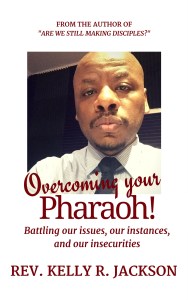
Read an excerpt from the upcoming book “Overcoming Your Pharaoh”

Overcoming10 (1 of 1)Click here to order now! In the meantime, please enjoy this excerpt from our Chapter on failure:

Character is formed in adversity

The adversity that we face during our trials and our failures is in fact what develops us. It’s in the adversities of the long and winding road to success that we learn just how fragile our dreams can be. It’s during those times that we develop not only what it takes to be successful, but also what it takes to stay that way. However success is defined for you, you’ll need some grit and determination to maintain it. Nothing can teach you that like falling on your face can.

I understand that none of us like to fall short, but there are so many lessons that can be learned from our failed efforts. I often tell people to learn to see God in everything, and where you can’t see God, you should seek God. Believe it or not, there are times when God made it hard for us, just as He did for Moses by the hardening of Pharaoh’s heart. There are times when we claim a faith that hasn’t been tested, so God puts us through it by allowing a few no’s to come our way and allowing a few doors to be slammed in our faces.

The question must be asked of us as we pursue our life’s dreams: How bad do you want it? That question must be answered in what we’re willing to go through to get to where we say we wanna be. If you’re ready to give up at the first sign of trouble (we’ll discuss that in the next section), then you should be wondering whether or not what you’re pursuing is for you. It’s not enough to just be talented or gifted in something. You have to be courageous enough, tough enough, and mentally strong enough to endure. Whenever you’re chasing your calling, your purpose, your passion, or your career, know that it will be a marathon and not a sprint.

Excitement will only take you so far. Enthusiasm will only take you so far. Just wanting it so bad will only take you so far. Even drive has its limitations. It’s what you do with opportunities that matter, and even more so, it’s what you do when there are no opportunities or when opportunity is snatched away from you by forces that are working against you.

It’s not just about God’s promises to you, but it’s also about whether or not you’ll let God mold you into the person that you need to be in order to live out the promise He’s made to you. If you read your Bible carefully, God often promised prosperity to the unprepared, the uncertain, the unwilling, and often the unqualified. It wasn’t until He molded them to fit the promise that He’d made to them that they were able to live out their purpose.

The benefit of your adversity is in the fact that it often prepares you for the next challenge. Even if the next challenge is unique in nature and something that you’ve never seen before, if nothing else, you come to rely on the fact that God brought you out before, and He can do it again. It’s during those times when things aren’t working out that we learn to see God working it out.

During those moments when it seems that nothing will ever go right, that’s the time when we must draw on the strength that God has been developing in us through our various trials, disappointments, and failures. James 1:3 tells us that the trying of our faith brings patience in us. Even if God isn’t the cause of your adversity, it is God that can make you stronger through your adversity. It is God that can help us to overcome when we feel overwhelmed.

To purchase other works, please click here to visit our bookstore!

#DontDieWithIt!

20479896_10209858942290115_499856648006117189_n (2)

#DontDieWithIt is a movement. It’s a statement. It’s a call to action!

Whatever it is that God has called you to do and be, your mission should be to not leave this earth without giving it your very best. It doesn’t do anybody any good in the grave. Whatever you do, don’t die with it!

That business idea He gave you, that dream He woke you up in the middle of the night to tell you about, that talent, that gift, that anointing, that undying desire to be something other than what “they” said you could and should be, don’t you dare take it to the funeral home. God didn’t give it to you for nothing. You can’t leave it undone.

This is an encouragement movement! This a motivational movement. This is a God-ordained movement. You have the time. You have the talent. You have the call. Be courageous. Be active. Be progressive. Be aggressive. God is on your side and He’s gifted you and purposed you. Do it all and do it now. Don’t die with it!

Purchase your #DontDieWithIt t-shirt here!

Have you considered the tree?

FullSizeRender (4)Nobody questions the tree. How it came to be, what it endured during its growth, or what it takes for it to maintain. You just know a tree when you see one. You have no idea what it took growing from a seed to the tree you see before you. You have no idea about the storms it has endured, limbs being broken away by strong winds that would’ve taken down a lesser tree.

People carving names and symbols on it, things that don’t represent who the tree actually is, but now it’s branded forever. Cars crashing into it, damaging its bark, and yet the tree is often left to supposedly heal itself (but we know that God is the healer). Dogs doing their business on it, and yet the tree continues to stand, renewing its leaves every year.

The message here is very few people will actually witness your growth, but that doesn’t change who and what you are. Many have enough vision to know that even though they didn’t witness the growth, their eyes aren’t deceiving them. You are what you are, whether they want you to be or not.

At the same time, some people know exactly what you are, they just refuse to respect it. They will brand you with names. They’ll dump on you. They’ll mercilessly crash into you and then blame you for being where you’ve always been, doing what you’ve always done. They resent you being in your calling! They’ll even desire to cut you down and cast you into the fire.

But don’t be discouraged! You are what God called you to be. Even when people don’t understand how you came to be, even when they didn’t witness your evolution, even when they wish to uproot you in the name of new development, stand strong. Just as God created you. He planted you and He will allow you to continue producing in your season.

“He shall be like a tree planted by the rivers of water, that brings forth its fruit in its season. Whose leaf also shall not whither; And whatever he does shall prosper.” – Psalms 1:3

In search of the Holy Ghost “push back”

cropped-20130824_22091611.jpg

I only need three minutes of your time.

There’s a serious issue plaguing the local congregations. Because of this issue inside the church walls, we’ve become ineffective outside of them. Many of our communities are dying around us, and we in the local congregations are failing to do anything about it. Why? Because we’re too busy trying to kill one another inside the walls of the church.

This past weekend, our Sunday School lesson was on spiritual deliverance (Luke 8:26-39). When giving the minister’s remarks on the lesson, I stated that we in fact have many demonic spirits within the congregation that keep us from ministering outside of it. But they aren’t just spirits that are only in what we perceive as “hell raisers” in our local churches.

They’re also spirits in anyone that would seek to push hell raisers out of the church into the wilderness, rather than try and rid ourselves of the spirit that’s infected our church, while at the same time looking to save a brother or sister that may be under the influence (James 5:19-20).

2 minutes left.

Here’s what we need to know: Hell raisers are always in attendance because demonic spirits transfer (study that Sunday School text I gave). They’re dedicated to their cause because the one that influences them never takes a day, hour, or minute off.

They’re always on time, they’re always together, they’re always loud, and they always state their position. And as members of the congregation, they have the right to do so. They’re at every meeting, every get together, and every function, and they make their presence known. Even if they don’t win, you will know that they were there. It’s their opposition that’s having the trouble.

Those that oppose this spirit are too meek, too passive, too quiet, and too afraid to speak in hostile situations. They’re living their lives on hope, but not a hope that produces action. They’re being pushed, but they’re unwilling to push back.

Now understand that being “holy spirit filled” is having the ability to give the benefit of the doubt. You’ll never convince me that you’re spirit filled if you can’t do two things:

  1. Not be so ready to believe the worst that you hear about people with no real proof.
  2. Even if you know that the worst is true about the individual, you believe that God can change them.

If we really and truly want to come together, at some point, we’ve got to be more willing to trust God for real change, and less willing to base all that we are on what we feel and past events. Because that’s what spirit filled people do. They accept the fact that the worst of us can be redeemed. But that requires activity. It requires prayer. It requires forgiveness. It requires restoration. And it requires resistance to those spirits that can cause us to believe that unity can only happen on our terms.

1 more minute.

So what is the benefit of a Holy Ghost push back? When we push back spiritually, we let the enemy know that we value unity more than we do confusion, and we show that by speaking out against what’s dividing us. We let the enemy know that we care for one another more than we do our position in the argument. We let the enemy know that we care more about being right with God than we do about winning an argument. We let the devil know that we need healing inside the congregation before we can go out into a sick world and show them what healed us.

Isaiah 54:17 tells us that no weapon formed against us shall prosper, and every tongue that rises against us in judgement, WE shall condemn. This not only means that the attacks of the enemy will fail, but it also means that we have the right to speak against the attacks. We can no longer keep silent about the dangers in the world, but we can’t help any of that if we refuse to speak against the dangers right at home.

I challenge anyone that’s being overrun by demonic spirits within your local congregation to spiritually push back. Not against the individuals that may be affected, but against the behavior. Push back against opposition that exists for the sake of opposition, and not for a defined principle or ideal, backed by Scripture. Push back against that spirit because that’s your true enemy, not the person you’re focusing on. Meek doesn’t have to mean weak. Find your push back!

Excerpt from “Going Through to Get Through”

Read an excerpt from Rev. Kelly R. Jackson’s latest book “Going Through to Get Through: Activating your faith during life’s most trying times”.
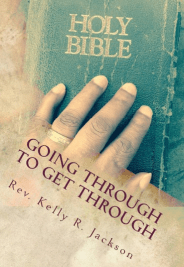
BookCoverPreview (2)Taken from the chapter:
“The challenge of God’s timing: Working your way through the wilderness”.

Available March 1st!
Order now $12.99

Buy Now Button


What are you waiting for?

When we’re trying to answer the question of why God brought us to a particular place, we must first examine ourselves. It’s so easy to begin questioning God and asking Him why we’re in a certain place or what we’re supposed to do now, but the first questions belong to us.

God may have in fact pointed us in a certain direction, but did we take the route that He told us to take? Did we go through the people that He told us to go through, or did our pride or our feelings about that individual cause us to use someone that God hadn’t authorized?

Did we commit to the vision that He gave us, or did we alter it? Most importantly, when we received that vision from a holy God, did we alter our living to coincide with living out the promise given to us by a holy God?

When you examine those questions for your own life before questioning, or even blaming God for why you have to wait in the wilderness, you may in fact find that it was never God’s plan for you to wait. Know that God’s blessings on your life aren’t yours no matter how you’re living.

When you ask God for a blessed destiny and He agrees to give it to you, you can’t continue on living however you want. God expects us to live up to the call and the blessings.

Also, you may find that it was God’s plan for you to go through some trials so that you might know that He delivered you, and so that you can appreciate your blessings when you reach them. All that you’re doing may have been designed for you to exercise your faith and for you to grow in that faith.

Consider again the Children of Israel. God could’ve made a way for Moses and the Israelites to escape captivity without ever having to confront Pharaoh. But by having to deal with Pharaoh head on, all were able to see that God’s power can deliver us without us ever having to cower in the face of those that wish to oppress us.

When they crossed the Red Sea, it wasn’t God’s desire for them to spend 40 years in the wilderness wandering. The journey from the wilderness to the Promised Land would’ve normally taken only a few weeks. It was their disobedience and lack of faith that kept them from reaching their destination sooner.

God’s promises to us are real, but we sometimes need to evaluate our commitment to God. There are times when we’re more committed to the promise than we are to the God of the promise. We want to go from point A to B, but God may want to add a few more letters to the equation.

God sometimes wants to refocus us on why it is we started out. So often we’re in this wilderness state looking to God and asking “What’s the holdup?” In the meantime, God is looking down at us and asking the same question.

There are times when God will slow progress because we’re moving in the wrong direction, or we’re moving in the right direction, but we’re skipping steps. There are also times when God will stop progress because we’ve stopped progressing. As we’re waiting patiently in the wilderness, we must also remember to wait FAITHfully!

We must remember to never give up on God just because traffic has momentarily stopped. There’s a plan, a path, and a purpose. But if you’re not moving, don’t always assume that God has stop working on your behalf. Sometimes, we’ve stopped working on His behalf. Sometimes, all you’re waiting on is you.

Isolation for elevation

Whether you’re in favor of the wilderness or not, you must understand that it’s all a part of God’s plan. It may not feel like it, it may not look like it, and it may be counter to what you thought God promised you, but know that it was always a part of God’s plan for us to be isolated before we’re elevated. This time of consecration is necessary if we’re to be what God would have us to be at the next level.

As God looks to shape and mold us into what He wants us to be, we must also understand that there is some reshaping that must go on as well.

So those of us that are passionate, but only passionate about sinful things, God wants to redirect our passion, not take it away from us. For those of us that are intellectuals, but only for worldly causes, God needs our intelligence, but He needs it focused on Him.

Those of us that are talented and gifted, but have used those talents and gifts for the world, God doesn’t want us to lay our talents down, He just wants us to use them for His glory.

When we come to God from the world or from a place where we weren’t in His service, we must understand that we have some things on us that must be removed. We have some habits, some ways, some addictions, and some behaviors that are not of God. Before we can truly be used for God’s purposes, these things have to be stripped away.

The easiest way to stay in a rut is to stay in the place that got you stuck. So when God calls us up and out for greater service, He’s going to call us out of the rut of former friendships, former family relationships, former jobs, former romantic relationships, and even former church relationships.

When He isolates us in the wilderness, He’s taking the time to strip us of all of our old allegiances in order to form some new alliances. When God is taking you to something new, you can’t be beholden to what’s old. Sometimes God has to break us apart in order to remake us into what He wants us to be.

When those Children of Israel had been in captivity all of those years, as much as they loved God, they had still taken on some characteristics of their oppressor Egypt. It’s been said that it took one night to get them out of Egypt, but it took 40 years to get Egypt out of them.

When we’ve been living in the world, following the edicts of the prince of darkness, we have some stuff on us. God can’t just elevate you to a Promised Land or a holy position just as you are. He’s got to have some alone time with you so that He can shape you into a vessel that He can fill, so that you may pour out into others.

Breaking tradition: It’s time for ministry outside of the pulpit

PhotoGrid_1432925643414Are we serving God traditionally, or according to His Word? These days, whenever we talk in the church about breaking tradition, we suggest removing some things because they’re “religious”. As though there’s something wrong with religion. My Bible tells me in James 1:27 that there is a pure and undefiled religion. Religion is only in vain when the man himself isn’t changed (James 1:26), but there’s nothing wrong with religion itself. However, when it comes to spreading the Gospel, tradition is a threat to stifle what God wanted spread to the world.

It is in fact The Great Commission (Matthew 28:19-20) that tells us to go. Our ministries are called to be mobile, outside the church walls. The days of sitting still in the pulpit waiting for an opportunity to preach are past. This isn’t to suggest that anyone disrespect leadership or strike out on their own. However, it is to state that God has provided so many different avenues for ministry these days that it’s almost lazy for associate ministers or evangelists to sit still inside of a church and do nothing with their calling, and shortsighted for pastors to not allow room for those associates and evangelists to explore avenues outside of the church where the gospel can be spread.

Now, I realize that this thinking may get me in trouble with some traditionalists. I’m definitely on the radar for saying it out loud, but this has always been my nature: Think about it, pray about it, wait for confirmation, and then speak about it. Some pastors have progressed to the point of encouraging those under them to grow in their calling and go into the world and help to spread this Gospel. They keep a watchful eye to make sure that purity and context are maintained, but they’re also encouraging. But, let’s be real. There are plenty of ministers that have been trained, not to speak, but to sit still and quiet. There are still plenty of pastors that believe that those beneath them are to be seen and not heard until they’re comfortable in their own spirit. While this is wise in some cases (as some just aren’t ready), where there’s an obvious anointing on others, it’s counterproductive.

Understand that this isn’t a strike at older pastors. There are many younger pastors that hold to some of the same traditions because that’s how they were brought along (hence, tradition). However, it is a strike against holding to tradition instead of yielding to the Holy Spirit. There are times when God will anoint and ordain outside of what our traditions call for. There are times when God will elevate sooner than our timetable suggests that He should. There are times when God will break up our traditions just to make us aware that He is in fact God and that He is not beholden to the same rules that we try and hold man to.

Times are different now, and therefore, we must understand that ministry needs to be different to meet the needs of the time. There was a time when the only way the Gospel could be spread from city to city, state to state, and country to country, was through physical travel. While pastors were necessary, it was in fact evangelists that spread the Gospel beyond the church walls. However, with the advent of things like the internet, social media, cell phones, and independent publishing, along with the progression of television and radio ministries, we have a lot more avenues to reach the masses. Because of all of these advancements, we can’t allow tradition to stifle the spreading of God’s Word because “we’ve never done it like that before”.

It’s amazing that we sometimes believe that growth should stop with the invention of the thing that we excel in. What that means is we have many pulpit preachers and pastors that can’t handle the progress that ministry has made. The idea that someone could reach people using something other than just the pulpit can be intimidating to someone that only knows that model. What’s often overlooked is the fact that preaching the way that they preach was once new, different, and questioned as well.

Consider the fact that some preachers, and even pew members in the black church still don’t feel as if someone has “preached’ if they don’t get excited or “whoop” in their sermons, as if that’s the only way that God’s Word can be proclaimed. The truth is that God’s Word has prevailed through many changes in delivery over the centuries and millenniums, and there’s no reason to believe that it will stop because a minister has tapped into a new way that God has provided to spread the message.

This is not an endorsement for any and every one to start blogs, YouTube accounts and Facebook pages to spread just anything. A person still needs to be trained in the Word of God, they still need to be mentored, and they still need to be tried and proved before they embark on The Great Commission. After all, that’s what Jesus did with the disciples. But the notion that the pulpit provides some sort of validation that the truth is being spoken is shortsighted. Many a preacher, and even some pastors, have stood in the pulpit and spoken Scripture out of context, as well as given their own theology in place of what The Bible teaches.

The fact is every generation goes further than the previous, because God never downgrades His people. We can’t allow traditional ways of ministry to stifle the growth of the Kingdom. Some of God’s best preachers and evangelist are sitting in a pulpit silent because some pastors have a traditional mindset towards the Gospel. Because some of these pastors have this mindset, they’re silencing people that God has ordained to speak to the masses and to a new generation of believers, in languages and ways that they can comprehend. Some of these traditionalist are attempting to protect the sanctity of “their” pulpits, while at the same time attempting to silence many of God’s new spokesmen and women.

It’s not that God changes, because the Bible says that He doesn’t (Malachi 3:6, James 1:17). However, God always presents us with advancements. In technology, in learning, in thinking, and yes, in His servants. The idea that God hasn’t improved on the preaching, teaching, and evangelism of His Gospel is to sell God short. It is to limit God and to say that once He created all of the great preachers of years past, that He somehow became unable to top Himself. But as I’ve often mentioned while teaching Bible class, God has a replacement for all of us, and it’s an upgrade. Even if it isn’t necessarily in ability or delivery, in may be in sincerity towards the work of the Gospel.

The idea of tradition in itself is to suggest that the way it was done before and all of the years since was not only the best way, but the only way, the pinnacle, and there can be no modifications or improvements. To change anything at all is to damage it. How would that have worked out if we never improved from rotary phones to cells? From typewriters to computers? From the horse and carriage, to the Model T, to what we drive today? Some traditions are good and never need to be removed. However, every tradition should be periodically checked, and modified if necessary to reflect the times we live in now. Failing to do so will cause stagnation. The only thing worse than watching the world pass us by has to be standing still without even trying to keep up.

The church has a great many traditions. Some were meant to be oppressive, while others were there to maintain order in God’s house. But our overall mission should be that the Gospel is spread and souls are saved. We can’t get caught up in arguments about how, as long as it’s done according to God’s Word. If something is done according to the Word of God, that’s not tradition. That’s just doing things the right way. But when something is done in a way that we’re unaccustomed to and it offends our sensibilities, that’s when we are to rely on the Holy Spirit. Just because we don’t understand a way that’s new to us, doesn’t mean it isn’t God’s way.

God is not on our timetable, and He may be moving faster because the time in nigh. If we do what we’ve always done, we get what we’ve always gotten. We’re in a new level of spiritual warfare these days, as the Bible warned us we would be (2 Timothy 3:1-7). The devil has tweaked his approach (internet, cell phones, etc), but his message is still the same: death and destruction. Why can’t we do the same thing? Tweak the approach, but maintain the message (eternal life through Jesus Christ).

The blessings in “all things”

FullSizeRender(2)How thoroughly do you read your Bible? Do you skip over words that seem insignificant, but in fact, they hold some significant power in the verse? We’ve all done it before. We look for the most majestic words in a sentence, all the while overlooking the strength that God has hidden in the small and seemingly unimportant. By simply taking the Bible word for word, you can receive the fullness of what God has to say to you.

Look at Philippians 4:13: “I can do all things through Christ which strengtheneth me”. Now, we all know that there’s power whenever Christ is mentioned in the text. However, once we get beyond Jesus, we often seek the power in the words “I can”. Yes, it’s in our human nature to focus on what we can do. However, when we do that, we often miss “all things”. Sometimes we misunderstand and misapply it, while other times we overlook its significance. We often see “all things” as an opportunity. We see it as God blessing us with gain. Also, “I can do all things” becomes a battle cry against those that oppose us or in instances where we’re trying to achieve things. But we often miss the entire blessing in the words “all things”.

These two words cover a multitude of things. We must remember that doing all things through Christ covers things beyond what we desire for our material growth. Those words also cover our healing. They cover grief when you feel like you can’t make it through. They cover broken homes and financial hardships. They cover wayward children. And yes, they cover church dysfunction and spiritual growth. Yes, when that scripture tells us that we can do all things through Christ, it really means all things!

One of my pet peeves is Scripture being taken out of context. All of us have been guilty of pulling Scripture out just to make a point, while not really considering the context in which it was spoken. Philippians 4:13 falls into this category. We see that we can do all things, but we don’t go back a few verses to find out exactly why the Apostle Paul was making this statement.

An examination of the Book of Philippians provides some insight. Paul, writing this letter to the church at Philippi from jail, is still rejoicing in The Lord. In the midst of his circumstances, he remains confidant in Christ! Sometimes we struggle to look past our circumstances to the God that controls it all, but as Christians we must always look to Christ rather than focusing on the bars that imprison us. If we aren’t trusting God in all things, we begin to focus on our limitations, and not His power.

By Philippians 4:11-12, Paul tells us in those verses that he has learned that Christ sustains him, no matter what his situation may be. Whether he’s rich or poor, hungry or full, or whether he’s high or low, he knows that Christ is his strength. This gives us the proper perspective. Does this verse apply to our various quests in life to be prosperous or to overcome our adversaries in life? Yes, it does. But we must also remember that this verse is a survivor’s verse. It’s a verse that reminds us that no matter what we may face in life, we can conquer it through Christ (also see Romans 8:35-39)!

Scripture also tells us in Philippians 2:5: “Let this mind be in you, which was also in Christ Jesus”. So we can’t trust God in “all things” with the mind of the unsaved. When we fail to look to Jesus in all things, when we lack the faith that God can bring us through all of the situations that we face in life, we are thinking with an unsaved mind. Not to suggest that you are unsaved if you lack confidence, but you’re engaging in unsaved thinking.

Its human nature to have fear and anxiety in certain situations, but we as saved Christians ought to have a new nature. We ought to be different. We ought to have a change in our mindset. A change that will allow us to see things in the spirit, not the flesh. Keep 2 Corinthians 5:17 in your hearts: “Therefore if any man be in Christ, he is a new creature: old things are passed away; behold, all things are become new”. Not some things. Not a few things. Not the things that we thought we couldn’t outrun. No, if you’re in Christ, ALL THINGS become new!

Walking the path to your purpose

10846337_10203187423746321_5228810459576158689_nSomething you often hear from Christians is: What is my purpose? We often struggle with our purpose because we have an idea of what we want to do with our lives. From the time we’re children under the age of 10, many of us have dreams of what we wanna be when we grow up. On into high school and college, we’ll take classes and pick majors that line up with what we feel we wanna do. We do things that line up with our will. But all of that should change once we turn our lives over to Christ.

Don’t get me wrong. There’s nothing wrong with pursuing your dreams, and scripture tells us that God will give us the desires of our hearts (Psalms 37:4), as long as it’s within His will (1 John 5:14). But as far as our purpose in concerned, as Christians, it should always be according to what God would have us to do.

The trouble we have is walking the path to our purpose. We all seem to want the purpose, but not the process that comes with living it. Even when following our dreams, there can be steps that we have to take that aren’t necessarily glamorous, but necessary in order to achieve what it is that we desire. The same is true with our purpose. There are times when God sends us through some things on our way to that purpose. It’s so easy to look up during these times and feel lost and confused, as if we’re not on track with what we’re supposed to do. This is where our faith is supposed to kick in.

When the children of Israel were led out of Egypt by Moses, there was a destiny awaiting them in Canaan. But in order to get to that destiny, they had to cross a river and spend some time in the wilderness. They had to overcome an obstacle and then go through years of preparation (which included some people and some habits dying off) in order to reach their promise. What this means is that in order to reach what God has promised for us, we sometimes have to be in uncomfortable situations. Situations where it seems as if there’s no progress or growth, but if we continue to walk the path ordered by God, we will eventually receive His promise.

Part of getting to our purpose is doing what God has ordered us to do right now. Even if it’s not what we want to do, it may be essential to what God wants us to do. At issue is the fact that we’re more focused on the finish than we are on the race. There are times when we’re doing things that seem to be (according to our understanding) a waste of time. However, it may in fact be those things that will lead us to our purpose. We get frustrated because we don’t know all of the steps to our purpose. Only God knows that. So when we feel we’re lost, we could very well be on track. It may not be comfortable, but necessary. The only way to find comfort during this time is to surrender our will to God’s will and trust Him along the journey.

If I may share my testimony, I started writing in my teenage years in high school. I started out writing poems and short stories. I was also a musician, playing in the school orchestra and dabbling in other instruments like guitar and piano. My plan was to put my gift of poetry and music together and become a professional musician. After graduation, I enrolled myself in a college for creative students and began taking music theory. As far as I was concerned, I was on my way!

A few years after that, however, I found myself in broadcast school, learning radio and television production. My mother, recognizing my love for music, thought I might make a great deejay and brought me some information on the school. However, I fell in love with and excelled at television production, so after graduation, I went that route instead. I still had dreams of fame, but now as a television producer/director.

After working in that industry for 7 years, I felt writing calling me again, so I began writing my first book. In the midst of doing that, I started making music on my computer. Though signs were there, and even the call on my life from God had come (with me running from it), I had no plans to become a minister. That was my ordained purpose from God, given to me from the time I was in my mother’s womb, but I couldn’t see it because, as far as my eyes were concerned, the path I was on said anything but minister.

PhotoGrid_1432925643414Fast forward to today, and it’s all clear to me now. I’m now the author of 6 books, the last three spiritual in nature, and references to God and His Word are all throughout the first three. I now host a weekly radio broadcast where I can use the training I received in broadcast school. The theme music for my broadcast was something I created on my computer 13 years before I ever had a radio broadcast. It was something I created for my personal enjoyment, never knowing how it would ever figure in ministry down the road. I’m now using my editing skills from my video background to create YouTube videos (we’ve only scratched the surface with this).

When God finally called me into the ministry, He begin to open up my understanding as to why I had gone down all of these different roads in life. I thought I was gonna be famous, but He wanted me to preach His Word. The ministry that He has called me to is unique. It’s not just a ministry for the pulpit or to be used only inside the church walls. For this specific time, in a very specific way, God prepared me for a very unique ministry. I didn’t understand the plan or the purpose, but I walked every road He told me to walk. For that reason, I’m able to do ministry exactly as He’s called me to.

Scripture tells us that the steps of a good man are ordered by The Lord (Psalms 37:23). If there’s anything I want anyone reading this to remember, it is the fact that there will be times when you’re walking certain roads in life and it will seem as if you have no clue of why you’re doing what you’re doing. It will seem as if what you’re doing is fruitless. I’m here to tell you that if you’ve given your life to Christ, you are what the scripture calls a “good man” (or woman). This means that God has ordered your steps. This means that just because you don’t know where you are, it doesn’t mean that God doesn’t know where you are. He won’t order your steps without mapping out your path. You must surrender your will (what you had planned for your life) to His will (what God has ordered for your life).

If we are servants of God, then we must come to understand that a servant has no will. A servant’s desire is to do the will of his master. In this case, we are all bound by Romans 8:28, which states that we are called to God’s purpose, not our own. Once you accept that, then you’ll truly know the difference between being lost and being uncomfortable. And when you’re living according to God’s purpose, there can be no greater definition to your life.

Laboring in vain: Our work is ineffective without God

Old-NewUnless The Lord builds the house, those who build it labor in vain.Unless The Lord watches over the city, the watchman stays awake in vain. It is in vain that you rise up early and go late to rest, eating the bread of anxious toil; for He gives to His beloved sleep – Psalms 127:1-2 (ESV)

One of the most dangerous thoughts to ever enter the mind of a Christian is that of self-reliance. The idea that we can actually do something on our own. The idea that we alone can rise above issues, situations, and circumstances. The idea that if we can do things to our own level of satisfaction and by our own standards, we can somehow achieve a level of happiness that goes beyond what God can provide.

This attitude is often what shapes our prayers. It causes us to try and order God around as opposed to seeking His plan for our lives. We’re more concerned with our wishes and our desires than we are with the spiritual order of things. However, the scripture at the heading of this lesson tells us that a spirit of self-reliance is an exercise in futility. We know that God is there, but are we remembering why? In fact, it is the idea of self-reliance that will drive us crazy because we will inevitably come upon a situation that is beyond our control. If you’re only relying on self, what will you do in these moments?

Any act without prayer and acknowledgment of God is an act without real hope. For with everything WE attempt to put into place, we attempt to eliminate God. The reference “in vain” in our text speaks to something that is ineffective or improper. Therefore, to do anything without first seeking God’s guidance and blessings will be ineffective and improper. Where we often miss the mark is in falling in love with initial or temporary successes. Something works once, twice, or maybe even more without seeking God and we assume that it will work all the time. In our flesh, we seek that instant and immediate gratification, and not the long-term promises of God that those who are spiritual are seeking.

This particular text is stressing to us the importance of keeping God at the head of all that we do. It’s great that concerned citizens (the watchman) want to keep watch over their cities. But who are we counting on to cover the watchman? When we live in a society that has become not only anti-prayer, but anti-God, how can we expect things to remain peaceful and orderly? When we would rather rage than pray, what will the outcome be?

Your Christianity can’t only be skin deep and situational. You can’t look in the face of the evil in the world and say that you’re tired of praying and you’re now ready for revenge. Scripture tells us that we should never cease praying (Luke 18:1, 1 Thessalonians 5:17), but we only seem to believe that during times in which we’d like a blessing. But what about during times of death? What about during times of immorality? What about during times of destruction? What about praying to God just because He is God?

Look at our text today and look at how we’re conducting ourselves in society. There can be no real activism without first activating our faith in God. There can be no “grinding” for a better life without Godliness. There can be no peace without The Peacemaker. There can be no healing without The Healer. If God isn’t at the head of whatever it is that we’re doing, it will fail. Let me simplify: we will fail without God, but God Himself will never fail without us.

No matter what problems we may face in life, God is capable of delivering us from them all. If we face them alone, it is simply because we have chosen to. However, as this scripture tells us, to face them without God is to face them in vain. You can work all the days of your life, but if you haven’t placed God over your finances, your labor will be in vain. No matter how much you have, it will never seem to be enough. If you refuse to bless God with just a portion of what He has already blessed you with, you will find that what you have will disappear without explanation (Haggai 1:5-7). It is through God that we find the value of life, not the price of it. After all, Jesus has already paid the price for our lives (1 Corinthians 6:20). The cost was much too high for us.

This Scripture tells us that if God doesn’t build our house, we that do build it are doing so to no avail. This doesn’t just include your physical house, but also your spiritual house (1 Corinthians 6:19). What this says to me is that God must be at the foundation of what we do. If He’s not the foreman of the project that is our lives, the structure itself is for naught, constantly on the edge of implosion.

We must always remember that God is a provider to His children. Whatever we have need of, He will supply according to His will. If you’re hungry, He will feed you. If you’re struggling with a load, He’s there to help you carry it. If you’re grieving, He’s the best shoulder to lean on. And if you’re weary, He will give you peaceful rest. It makes no sense for us to stay up toiling day and night for material possessions or out of fear of what man can do to us. We mustn’t be weary in our well doing, so we must continue to stand and work for what is right. But we can never accomplish anything without acknowledging the God that owns it all.