
There’s no doubt that every pastor wants to be respected, appreciated, and loved by those that they’re charged with leading. Those of us that labor for The Lord, pour out of ourselves on a daily basis, and those of us that give sacrificially in many unseen ways would like to hear from the people that they see us. We know that God sees it and will reward it, but it’s always nice when the people encourage and thank us as well. But what do we do when appreciation crosses the line into undeserved praise?

Unfortunately, it’s human nature for us to lift people up (sometimes only to tear them down when they inevitably fall short). This is why we have such a thing as celebrities in the first place. We sometimes struggle to appreciate gifts and talents without drifting into a form of worship. Fan clubs and followings are what we do. With the rise of social media over the last 15 years, this mindset has been exacerbated. These days, people don’t really even need gifts and talents to develop a following. This is just the way of the world. But when it comes to the church, this new landscape of worship is truly dangerous ground.
These days, it seems as if the church is turning out more celebrities than we are disciples. It’s so out of hand that people don’t believe you have an anointing if you don’t have a following of some sort. This is true whether you are a preacher or a praise and worship leader. People are more likely to ask you how many followers you have on any particular platform before they ask you about your convictions concerning the faith.
For this reason and for the sake of the future of the church, pastors can no longer pretend to be naive about the potential of being idolized by the people because we have far too many public examples of this happening. I’m a firm believer the those in ministry know when they’re being put on a pedestal and being praised in an unhealthy manner. And when that happens, it is upon us to stop it.
It should be incumbent upon every pastor to make sure that we are being respected and supported, but never idolized. Jesus is the only One worthy of worship. If the people believe that we can do no wrong , it’s no longer a church. It’s a cult. We must remember that the treasure is in fact in an earthen vessel. We must remember the frailty of our own humanity.
I’m aware that this profession has gone from being viewed as a profession of service to something of a platform and a means of obtaining wealth and popularity. I’m also fully convinced that this was never God’s plan for His servants. It’s okay for us to be celebrated for our labor at times, but we can’t allow the celebrations to turn us into celebrities, and we can’t allow appreciation to turn into worship and idolatry.
Writing books, having a radio broadcast, doing a podcast, and sharing videos on social media has caused me to be seen by people all around the country. I’ve been in contact with people that I may never meet in person. Some of these people have shared with me how a sermon I preached, a post I made, a podcast I recorded, or a book I’ve written has helped them in their journey. My response is always the same: “To God be the glory!”
It is my belief that in our quest as pastors and preachers to be properly appreciated, some of us have allowed that appreciation to drift into undue praise. That statement may ruffle some feathers, but if you are a pastor reading this and it hasn’t happened to you, you’ve no doubt seen it before.
I do my best to lean into Matthew 5:16 (NLT):
“In the same way, let your good deeds shine out for all to see, so that everyone will praise your heavenly Father.”
We are also challenged in 2 Corinthians 4:5-7 to always preach Jesus and not ourselves. We are called to remember that the power is of God, and not us. When we remember this, we not only keep ourselves in perspective, but we’re also able to recognize when the people are praising the wrong entity. And while it’s great to be honored, we must remember where the glory belongs. The moment the people lose sight of serving God above all else, we’re all in danger.

In my latest book Follow Me, I reiterated a point that I’ve shared with others along my own journey. When we were called to preach, pastor, and evangelize, we were not called into the appreciation business. The Gospel is centered around a crucified Savior. If the Head of the Church was hung on a cross, persecution is a hazard of this job. And while pastors should be appreciated for the sacrifices that they’ve made in their lives, I’m confident and comfortable is saying that none of us should be praised because none of us have died on the cross so that people might be saved.
We must remember what God says in Isaiah 42:8:
“I am the Lord; that is my name! I will not give my glory to anyone else, nor share my praise with carved idols.”
The people must remember this and be reminded of it when they forget. No doubt, they will know our frailties when we inevitably stumble along the way. It’s in those moments that we need grace, not justifications because of how the people have elevated us. We can no longer afford to be deified by those that we are called to draw to Christ.
Let’s be honest, sometimes our egos get the best of us. We have a few viral moments, we’re platformed in some fashion, or the membership of our congregation gets a boost. The accolades and compliments start to flow and if we’re not careful, we start to believe that we really are the driving force behind this movement. This is where we have to catch ourselves because sometimes the people that are propping us up don’t have the capacity to stop themselves.
The idea that we can praise men above praising God and still be healthy as a church is a fallacy. The people of the church won’t thrive as long as they have more reverence for who they’re serving under than they do for who they’re serving ultimately. God’s servants are just that. God’s servants. Earthen vessels.
We can’t effectively make disciples if the people are only interested in following us. The church has one primary objective and function: Make disciples. If the people aren’t loyal to Christ above all else, we’re doing them a disservice.
I believe in honoring pastors because I honor my pastor. I believe in appreciating pastors because I appreciate my pastor. However, what the church must run away from is our appetite for celebrity over celebrating people for their service. We must run away from worshipping the vessel instead of worshipping the Savior. We have to run away from our love of the charisma of men and go deeper into our love of Christ. Appreciate the vessel, but give God the glory.
 Every now and then, we misapply the phrase “It don’t take all of that”. Many times, we’ll say it without understanding what it really does take. For example, my praise may seem a bit much to a person that has no idea what I’ve been through. However, there are times when the statement is apt. There are times when we make something complicated, when a straightforward explanation is all that’s needed.
 Grassroots or small ministry has become a dirty word amongst the people. These days, everybody wants to start at the top. Even those that are on the bottom have aspirations that are beyond their meager beginnings. It seems as if they haven’t even asked God if they’re where they’re supposed to be before telling God where they want to go. Nobody wants to plant anymore. We all want to go straight to harvest season.
 There’s always been a great struggle in the church to get the congregation to read more often. There’s a need for them to open their Bibles more often than just Sunday morning when the Pastor gives his text. The desire is that the pew not only quotes Bible verses, but also studies their Bibles. Yes, we all need to study The Word. But what about supplemental reading that could be beneficial to the congregation? Not just a book full of motivational quotes and inspirational sayings, but books of Christian substance that can draw the believer into a closer relationship with God, and closer to the true call of Christians: Make Disciples!
 In my book An Understanding with God, I referenced the fact that we come from a damaged DNA in Adam. David outlines this in Psalm 51:5 when He says we were born in sin and shapen in iniquity. This stresses the fact that sin is a part of our makeup, and if not for the Spirit guiding us, we’re all susceptible. After all, the man that wrote the Psalm wrote it after taking another man’s wife, getting her pregnant, and having that man killed to cover up his sin. And he was a man after God’s own heart.
 What I find most fascinating about the growth of the church in the Bible (Acts) is that it was never accomplished be people that stood still. As Jesus gave His disciples that Great Commission (Matthew 28:19-20), the operative thing for them was to be mobile. They couldn’t spread the Gospel standing still. They were to tarry for the Holy Spirit, but once the Spirit came (Acts 1:8), they were to get moving. If this is in fact the mandate for Christians (followers of Christ), why are we fighting so hard to stand still?
 One of the great challenges of true leadership is walking the talk. Not just giving instruction, but being willing to follow that which you’ve laid out for others. And in the event that those rules don’t apply to you, showing that you are following the ones that do apply to you. This is especially true when it comes to preaching and pastoring. In fact, we are the basis of that popular phrase “Practice what you preach”. It’s so vitally important that we’re living by that principle because people in their flesh are often unable to look beyond God’s representative and see Him for themselves.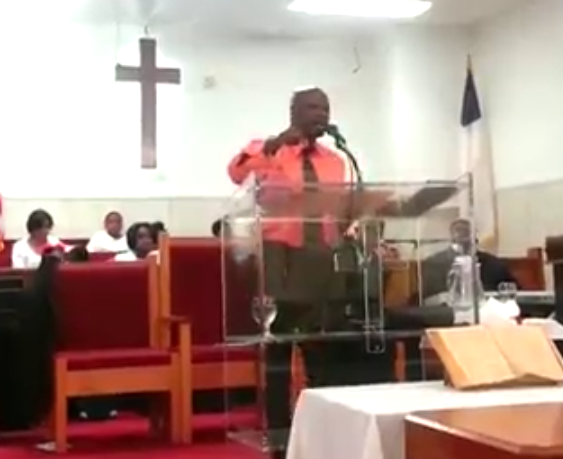

 KRJMinistries.org