Category Archives: Christian

Earthen Vessels: As Pastors, We Must Remember Who We Are, Even If The People Don’t Want To 

There’s no doubt that every pastor wants to be respected, appreciated, and loved by those that they’re charged with leading. Those of us that labor for The Lord, pour out of ourselves on a daily basis, and those of us that give sacrificially in many unseen ways would like to hear from the people that they see us. We know that God sees it and will reward it, but it’s always nice when the people encourage and thank us as well. But what do we do when appreciation crosses the line into undeserved praise?

Unfortunately, it’s human nature for us to lift people up (sometimes only to tear them down when they inevitably fall short). This is why we have such a thing as celebrities in the first place. We sometimes struggle to appreciate gifts and talents without drifting into a form of worship. Fan clubs and followings are what we do. With the rise of social media over the last 15 years, this mindset has been exacerbated. These days, people don’t really even need gifts and talents to develop a following. This is just the way of the world. But when it comes to the church, this new landscape of worship is truly dangerous ground. 

These days, it seems as if the church is turning out more celebrities than we are disciples. It’s so out of hand that people don’t believe you have an anointing if you don’t have a following of some sort. This is true whether you are a preacher or a praise and worship leader. People are more likely to ask you how many followers you have on any particular platform before they ask you about your convictions concerning the faith. 

For this reason and for the sake of the future of the church, pastors can no longer pretend to be naive about the potential of being idolized by the people because we have far too many public examples of this happening. I’m a firm believer the those in ministry know when they’re being put on a pedestal and being praised in an unhealthy manner. And when that happens, it is upon us to stop it. 

It should be incumbent upon every pastor to make sure that we are being respected and supported, but never idolized. Jesus is the only One worthy of worship. If the people believe that we can do no wrong , it’s no longer a church. It’s a cult. We must remember that the treasure is in fact in an earthen vessel. We must remember the frailty of our own humanity.

I’m aware that this profession has gone from being viewed as a profession of service to something of a platform and a means of obtaining wealth and popularity. I’m also fully convinced that this was never God’s plan for His servants. It’s okay for us to be celebrated for our labor at times, but we can’t allow the celebrations to turn us into celebrities, and we can’t allow appreciation to turn into worship and idolatry.

Writing books, having a radio broadcast, doing a podcast, and sharing videos on social media has caused me to be seen by people all around the country. I’ve been in contact with people that I may never meet in person. Some of these people have shared with me how a sermon I preached, a post I made, a podcast I recorded, or a book I’ve written has helped them in their journey. My response is always the same: “To God be the glory!”

It is my belief that in our quest as pastors and preachers to be properly appreciated, some of us have allowed that appreciation to drift into undue praise. That statement may ruffle some feathers, but if you are a pastor reading this and it hasn’t happened to you, you’ve no doubt seen it before. 

I do my best to lean into Matthew 5:16 (NLT):

“In the same way, let your good deeds shine out for all to see, so that everyone will praise your heavenly Father.”

We are also challenged in 2 Corinthians 4:5-7 to always preach Jesus and not ourselves. We are called to remember that the power is of God, and not us. When we remember this, we not only keep ourselves in perspective, but we’re also able to recognize when the people are praising the wrong entity. And while it’s great to be honored, we must remember where the glory belongs. The moment the people lose sight of serving God above all else, we’re all in danger.
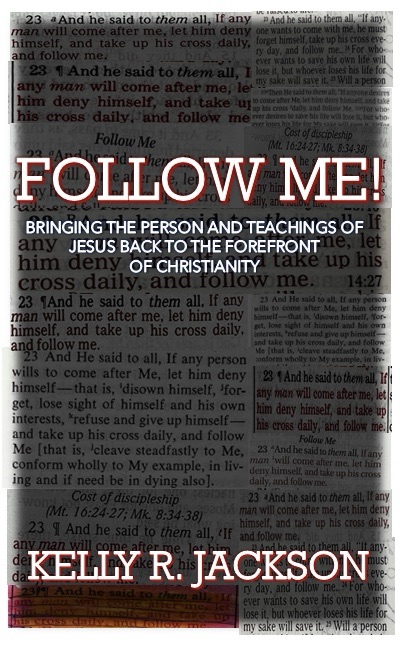
In my latest book Follow Me, I reiterated a point that I’ve shared with others along my own journey. When we were called to preach, pastor, and evangelize, we were not called into the appreciation business. The Gospel is centered around a crucified Savior. If the Head of the Church was hung on a cross, persecution is a hazard of this job. And while pastors should be appreciated for the sacrifices that they’ve made in their lives, I’m confident and comfortable is saying that none of us should be praised because none of us have died on the cross so that people might be saved.

We must remember what God says in Isaiah 42:8:

“I am the Lord; that is my name! I will not give my glory to anyone else, nor share my praise with carved idols.”

The people must remember this and be reminded of it when they forget. No doubt, they will know our frailties when we inevitably stumble along the way. It’s in those moments that we need grace, not justifications because of how the people have elevated us. We can no longer afford to be deified by those that we are called to draw to Christ. 

Let’s be honest, sometimes our egos get the best of us. We have a few viral moments, we’re platformed in some fashion, or the membership of our congregation gets a boost. The accolades and compliments start to flow and if we’re not careful, we start to believe that we really are the driving force behind this movement. This is where we have to catch ourselves because sometimes the people that are propping us up don’t have the capacity to stop themselves. 

The idea that we can praise men above praising God and still be healthy as a church is a fallacy. The people of the church won’t thrive as long as they have more reverence for who they’re serving under than they do for who they’re serving ultimately. God’s servants are just that. God’s servants. Earthen vessels. 

We can’t effectively make disciples if the people are only interested in following us. The church has one primary objective and function: Make disciples. If the people aren’t loyal to Christ above all else, we’re doing them a disservice. 

I believe in honoring pastors because I honor my pastor. I believe in appreciating pastors because I appreciate my pastor. However, what the church must run away from is our appetite for celebrity over celebrating people for their service. We must run away from worshipping the vessel instead of worshipping the Savior. We have to run away from our love of the charisma of men and go deeper into our love of Christ. Appreciate the vessel, but give God the glory.

The Point of It All: Why A Boycott Must Start With One Small Step

On February 28, 2025, there will be a national economic blackout taking place. In this climate of upheaval in the country at the hands of an extremely corrupt administration, along with corporate greed and rebellion against diversity, equity, and inclusion, many are calling for us to close our wallets for one single day of solidarity in order to send a message that the so-called powers that be will feel. The idea is that while our voices do matter, nothing makes these people respond like a loss of revenue.

While this all seems noble, the challenge for most boycotts doesn’t start on the outside. It starts on the inside. It starts with people that would actually benefit from what the boycott is looking to accomplish being the first to respond negatively to a call for simple action. It’s usually the same question: What difference will any of this make? Then, there’s the follow up question: Why is it only one day?

I’m also seeing a lot of people wondering what the point of this is if we spend money the day before or the day after. I’ve come to these conclusions in the midst of these questions. First, it seems as we don’t want to go a single day without spending money. That’s problematic. Second, I see why it’s so hard for us to break habits because we don’t see a value in taking the first step because we want the entire staircase all at once.

Many are missing the totality of what the boycott is calling for. It’s not a total boycott on spending. If there is an absolute need, the idea is that you will do what you have to do. However, the point that people are glossing over is the point of the boycott where we’re encouraged to shop small businesses and to shop locally. It’s not a boycott against our basic needs. It’s a boycott against large corporations.

The spirit of the boycott is for us to get back to supporting each other on a smaller scale rather than feeling the need to line the pockets of people that don’t operate in the best interests of society as a whole. The spirit of the boycott is to lift up the “little man” as opposed to propping up a system that’s designed to crush the little man.

Many of those that question the point of a one day boycott don’t understand how significant a single step is to changing a habit. It’s ironic that people that will bristle at a one day protest will claim that the protest should be longer. But if one day is an inconvenience, a week without Amazon would send them over edge.

From my perspective, the idea of this is to change our habits. Where the boycott calls for shopping locally and at small businesses, the hope would be that we would continue to shop at those places going forward. The hope is that we come to realize that much of what we’ve been made to believe that we need in two days has never been that urgent. Much of what we’re ordering from the Amazon behemoth could be purchased by just making a quick stop on the way home from work or while we’re out running errands. You know, like we used to do before we were convinced that we couldn’t be bothered.

As a small business owner, I’ve always been sensitive to this. People can buy my books anywhere, but I’ve always tried to guide them to my website so that I didn’t have to share my profits with big corporations. Some people have obliged me, while others did what was most convenient for them. Either way, I’m blessed, but because I understand what it’s like to have my profit split with some company that never spent a moment working on my projects, I do my best to buy directly from people that are in business independently.

This call for going smaller and local has been something I’ve been trying to do since December of last year. Particularly, over the last month, I’ve made it a mission to avoid certain corporations and I’ve done my best to encourage my wife to do the same. It’s all about breaking habits, but most importantly, it’s about principles. Most large corporations only have corporate interests and they have no concern about social responsibility, equity, or public wellbeing. That is, until it affects their bottom line.

We don’t need to sit still or be overly critical of a one day effort to send a message simply because these systems won’t fall in one day. In this current climate, we must build a habit of resistance. Habits aren’t formed in one day. They’re formed over time. Step by step, and inch by inch. Make no mistake about it, after the Montgomery bus boycott, some people never rode the bus again. I know, that boycott lasted a long time. But it all started with a step. And in the event that this first step isn’t enough for some, my hope is that they will step aside and let those of us that believe it matters do what we do. February 28th isn’t about winning the war in one day. The point of it all is to send a message.

Be Concerned, But Don’t Worry

One of the greatest challenges of our faith is the balancing act between faith and fear. In the simplest sense, one is an act of our human nature, while the other is a spiritual response.

Sometimes we’ve been a little too assumptive in our assessments of those that claim Christianity. We’ve assumed that they really understand what it means to live a life of faith, so when trouble comes along, we tell them to call on something that they don’t understand.

With what we’re seeing from this current administration in the White House, the entirety of what they’re doing is based on fear. They want everyone running around with their hair on fire while they go about their true agenda. So, when the president and the media seem determined to stoke the fears of the people for their own purposes, how are people of faith going to respond? We know that our faith calls for us to trust God and not fear, but that’s a spiritual response. What do I do with that part of me that’s genuinely afraid?

“Follow Me!” Now Available!

Recently on the prayer line at For The Kingdom Christian Church where I pastor, I brought Psalms 33 to the attention of our people. Not only did I want to reassure them considering what’s going on in the world and what’s no doubt being pushed through their phones and their televisions that was designed to make them worry, but I also wanted them to see what Scripture once again tells us about our God. I didn’t want to just tell them “don’t worry” because I didn’t want it to seem like another empty encouragement with no substantive reason why they shouldn’t worry. I wanted to challenge their faith by showing them what was written in the Bible that they say they hold dear.

Again, it’s human nature to be concerned, but it’s spiritual nature to not be worried. The only way that we can lean in to not being worried as Christians is to lean into our history with God, and lean on the Word of God. And if you look into your Bible, you will see both God’s history and His Word.

Psalms 33 opens with a call for us to praise the Lord, but pay attention to verses 4 and 5. In the NLT version of Scripture, it says:

“For the word of the Lord holds true, and we can trust everything He does. He loves whatever is just and good; the unfailing love of the Lord fills the earth.”

These verses remind us that God can be trusted and His love is found in the earth, even if it isn’t found in the hearts of every man. It’s there and it’s available for those who seek to find it and for those that wish to express it. These verses also tell us that God loves what is just, which lets us know that He isn’t co-signing anything that isn’t. I don’t know about you, but I find it reassuring that God is still against evil. But Psalms 33 isn’t done yet. Here’s what it says in verses 6 through 9:

“The Lord merely spoke, and the heavens were created. He breathed the word, and all the stars were born. He assigned the sea its boundaries and locked the oceans in vast reservoirs. Let the whole world fear the Lord, and let everyone stand in awe of Him. For when He spoke, the world began! It appeared at His command.”

Scripture is reminding us that only one Being has ever simply spoke and the universe that He created had to obey. What God does doesn’t require an act of congress or a court order. He simply speaks and the world must obey. Even as the text speaks of fearing Him, it isn’t speaking in the natural. It’s speaking of a spiritual reverence for His awesome power.

As if what we’ve already seen isn’t enough to inspire confidence in God in the face of the evil that we see attacking this nation in the name of someone that wishes to be king, look at verses 10 and 11:

“The Lord frustrates the plans of the nations and thwarts all their schemes. But the Lord’s plans stand firm forever; His intentions can never be shaken.”

God has a way of confusing the plans of the wicked. Nonbelievers may tell you that it’s foolish to believe in God, but history and His story tells us different. How many times have evil regimes risen, only to end up in ruins? How many times has it seemed as if evil has perfected its formula, only to be brought down in the end, and often from the inside?

This is not written to be dismissive of our human concerns. This is being written to encourage those in the faith to remember who our God is. Every time evil makes a move, God ultimately brings evil to a halt. I know it seems as if this new version of evil is better prepared than those before it, but I also know that man once believed that not even God could sink the Titanic. We’ve always had an inflated opinion of what our hands do and not enough reverence for what God’s hands have done over and over again.

Consider verses 16 and 17:

“The best-equipped army cannot save a king, nor is great strength enough to save a warrior. Don’t count on your warhorse to give you victory— for all its strength, it cannot save you.”

In the end, whether we’re facing evil in our government, our lives, or even in our churches, we in the faith must remember where we are to place our hope. The enemy always gets out of the gate fast, but we must remember that everyone that’s in front of us isn’t necessarily ahead of us. Things are being signed daily in our government and reported on just as often. If we insist on only believing what we see, then hopelessness makes sense. But people of faith aren’t called to just what our eyes see. This hope that we have was never physical. It was always spiritual.

I don’t want anyone to get the wrong idea about Christianity, however. It is our responsibility to call out what’s wrong and fight against evil oppressors when they come. Being faithful doesn’t mean being idle or passive. Being faithful means being actively engaged in the fight against evil, but even as we fight, we trust God with the outcome.

Be concerned because God never told us to ignore the things of this physical life. He encouraged us not to worry about them (Matthew 6:27-34). The enemy ultimately wants your life, but for right now, he’ll settle for your attention on things that he ultimately has no power over. Be vigilant, but be encouraged. Consider how Psalms 33 closes in verses 18-22:

“But the Lord watches over those who fear Him, those who rely on His unfailing love. He rescues them from death and keeps them alive in times of famine. We put our hope in the Lord. He is our help and our shield. In Him our hearts rejoice, for we trust in His holy name. Let your unfailing love surround us, Lord, for our hope is in You alone.”

The enemy is strategic, but he’s not invincible, and neither are his minions. Even when calamity is all around us, God has a way of protecting us. The text tells us that He is our hope and our shield. Even in this current season, with God’s covering, things might happen around us, but those things won’t happen to us. We must endure and we must persevere. Concern is human. Let’s lean into the spiritual.

To order Pastor Jackson’s latest work Follow Me: Bringing the Person and Teachings of Jesus Back to The Forefront of Christianity, visit www.krjpublishing.com/bookstore

Read An Excerpt from “Follow Me: Bringing the Person and Teachings of Jesus Back to the Forefront of Christianity”

Check out this excerpt from Pastor Kelly R. Jackson’s upcoming book. Official release date is Friday January 24, 2025. To preorder a copy, visit http://www.krjpublishing.com/follow

Keep Building On Christ

One of the things that I’ll often hear from the church is our lamenting about how strong the church used to be and how people aren’t as committed as they used to be anymore. However, when I hear people say those things, I always hear them talking about how we can move forward by making even more changes, but I rarely hear people talking about studying our past successes.

Something that I think that our young people struggle with most these days, especially in the Black community, is knowledge of history and historical figures. We’ve convinced them that nothing can be gained from the past because we now have all of these new tools and gadgets, and we have access to much more information than those before us.

We’ve failed to help them to understand that because they have these tools to access information, they can actually access more information about what happened before them and learn from the past. They can learn what worked and what didn’t work. But most importantly, they can learn to tweak as opposed to seeking to destroy everything that they deem outdated. Some things you need to make wholesale changes to, but some things just need an upgrade.

If we go back into the history of our churches and see them full, vibrant, and strong, why wouldn’t we study why that was? We’ve implemented so many new things, and yet, there still seems to be a great falling away, as the Bible said there would be. If we’re so much better than our predecessors, why were they so much more committed than we appear to be? If our ideas are so much better now, why are we struggling to stay connected to the truth of what Christ called for? If we’re so much more educated about Scripture now, why are we failing to stay connected to Scripture in our approaches in the church?

I’m just convinced that God didn’t make better ways for us to be educated in the church just so that we could flex our muscles every week by showing how smart we are. I’m of the belief that God gave us new avenues for learning of Him so that we can make the church stronger, not rip out its foundations. One of the struggles between Peter and Paul in Scripture was in their coming to the understanding that God was using both of them in different ways to speak to different groups of people, but all for one common purpose.

I feel as though at times, some have decided that all that we’ve introduce in the church that’s new in the ways of preaching and teaching must be used to eliminate what’s already there, but I don’t believe that’s what God intended. It’s my belief that God may have called for a new delivery, a new way of educating, a new way implementing, and even new voices, but I don’t believe He ever wanted us to abandon the basics. No matter how we may evolve or grow, there are some things that we can never go away from if we intend for our churches to stay strong.

Consider the narrative of Paul and Apollos. We see Apollos in Acts 18:24-28 and the Bible says that he was eloquent in his speaking, and he knew the Scriptures well. He preached with enthusiasm, spirit, and accuracy, but his accuracy was based only on what he knew to that point. He still didn’t have the full picture concerning Jesus. The Bible says he only knew of the “baptism of John” which spoke of the coming Messiah, and while Apollos believed that Jesus was the Messiah, his preaching hadn’t fully changed to reflect the fullness of what that meant until Paul’s co-laborers, Aquila and Priscilla, explained the way of God to him more accurately.

By the time we get to 1 Corinthians Chapters 3 and 4, Paul has to address Apollos’ rising popularity in the church because the people had begun to “choose” Apollos over Paul, or Paul over Apollos. Paul doesn’t have to address Apollos because this appears to be the nature of the people, not the nature of the preacher. According to Scripture, Apollos is just preaching the Gospel, but as it is in human nature, people have their preferences and will often choose presentation over principles.

In this discourse, Paul makes two points that should stay with the church until the Lord returns. The first being that the ONLY foundation that matters is Christ, and building on anything else won’t last. The second being that the builder doesn’t matter because ONLY God will give the increase. No matter what our hands do, no matter how eloquent of speech we are, and even if we are the “expert builder” that God allowed to participate in the laying of the foundation, our intellect is no match or substitute for God’s involvement.

The point that Paul, and thus, Scripture makes is that the foundation has been laid by God through Christ. We can’t lay another foundation over the one that is Jesus Christ. The builders will be judged by how they added to what was laid, not by what they built themselves. The builders will be judged by their work because they were never responsible for laying the foundation. God took care of that. As builders, we’re responsible for furthering the Gospel. We’re simply workers. I know we don’t like to hear this, especially as pastors and preachers, but we don’t matter nearly as much as we think we do. If the people grow, it will be because of what God does. It doesn’t matter who planted and it doesn’t matter who watered.

As we’ve grown and gained more knowledge, we have become too dependent on ourselves. We have great ideas, but those great ideas need more than just our intellect. We’re trying to major in the spectacular while minoring in the organic. Every strong relationship got that way over time and with natural growth. The spectacular bang has never been sustainable. True sustainable church growth and the true making of disciples takes time, and I fear that we’ve started to see our great ideas as shortcuts to growth. The spectacular may get them to the building, but will it get them discipled?

It seems that we’re in constant search of the membership explosion that we saw in Acts 2:41 where 3000 were baptized, and we have no desire for the type of one-on-one encounter that Phillip had with the Ethiopian eunuch in Acts 8:26-40 where the Gospel reached just one person in a moment in time, but he was saved and that encounter impacted a nation. It seems these days that we’d rather have a conference, convention, or workshop, as opposed to just having regular and consistent Bible class so that the people can grow organically.

When It Comes To Dementia, We’re Often The Ones In An Alternate Reality

People will often have opinions of us based on their understanding, and not necessarily their experiences with us. They watch from a distance and they see this action or that one and they assume that they can put the pieces together based on what they saw. Through our natural skepticism and our often high opinion of our own ability to always be right, we never even consider the idea that a little more investigation and a few more facts might paint the full picture and change our view.

We’re so convinced of our own intellect, that if we find something that contradicts us, we assume right away that the fix is in and a conspiracy is at hand. This is where we find ourselves in this nation today. Many of us offer commentary based on misinformation, the opinions of others, optics, or simply from a place of ignorance.

Over the last week or so, we’ve seen people make a lot of statements and assumptions about cognitive decline and dementia. What I’ve noticed is that many people literally have no idea what they’re talking about or even the difference between the two. While cognitive decline can be a sign of coming dementia, it doesn’t always mean that dementia is coming. Sometimes, people are just getting older.

If you’ve ever cared for someone one on one as I have that had dementia, you would be offended by people that referred to someone that wasn’t always as sharp as they once were as having dementia. And when I speak of caring for a dementia patient, I mean really caring for them. Not knowing their condition, and not knowing someone that you suspect is suffering from such an insufferable condition. I mean really cared for them, 24/7. If you’ve been on the front line, you know what dementia really looks like.

The ignorance going forward these days is staggering and unfortunate. Based on the opinions out there, I’m not surprised that we put (throw) family members away at the first inkling of decline. Many don’t have patience for the elderly. All of this uninformed commentary is shameful in this country, but not surprising. It’s where the former administration dragged us to, and we’re now wallowing in misinformation and insults.

The reality is if you’re of a certain age, you are already experiencing some sort of cognitive decline. If the Lord lets me live, I’ll be proudly 55 years old at the end of this month. My mind is sharp, but I’d be lying if I said I never lose my train of thought at times. I’d be lying if I said I never forget things and don’t need to keep notes to remind me. I’d be lying if I said that on occasion, I run into people and remember the face, but not the name. Does that mean that I will suffer one day from dementia? No. That means I’m getting older.

At the same time, given some time, my train of thought comes back. If someone reminds me of the name associated with the face, I remember immediately. Given a moment, things clear up. While I may not be as sharp as I once was, I’m still very much here.

Conversely, those with dementia are in an alternate reality. Try as you might, you can’t just drop a name or a fact on them and they automatically reset. Sometimes, it takes hours. Sometimes it takes days. Sometimes they turn a corner, never to return to our reality. They just settle into their own world and we are the ones that have to adjust. And we don’t even have time to get into “sundowning”.

Sometimes they forget your name and give you a new one altogether. One that suits their reality, not yours. One that makes them comfortable, no matter how uncomfortable it makes you. For this reason, we should be careful of how we use cognitive decline and dementia as though they are interchangeable or the same thing. It’s irresponsible and disrespectful to those we’re speaking of, and to those that may hear our often ill informed opinions.

In John 7:24 (NLT), Jesus warns us: “Look beneath the surface so you can judge correctly”. What Jesus is stressing here is fact gathering. He’s stressing investigation. He stressing that we don’t lean to our understanding without understanding what we’re judging. He’s stressing that we don’t draw conclusions based on what we saw, as opposed to what we’ve learned through experience or investigation.

My first hand, front line experience with dementia has forever shaped how I view elder care. Even though I had witnessed it up close before with my grandmother and my aunt and the care my mother gave them, it was an entirely different experience having to be my mother’s primary caregiver when it attacked her. I knew a lot from watching my mom be a caregiver, but what I gained through experience was much greater than what I thought I knew. I wish all my mother had was cognitive decline and bouts of forgetfulness.

While we have a high opinion of our opinions, we need to remember that they are in fact opinions and not facts. How we feel can govern our individual selves, but society as a whole should function on facts.

I would also caution us on how we devalue people that aren’t as sharp as they once were, as though they have nothing else to offer. We must remember that past their prime doesn’t mean past their usefulness. We can’t be so quick to abandon those with history and wisdom.

I know many a seasoned preacher, many of whom speak slower than they used to and take longer to form their thoughts, but they’re still a well of knowledge. Many churches are struggling because some younger preachers and pastors haven’t drawn from those wells. Even in the midst of dementia, my mother would still speak words of wisdom. I know because I didn’t abandon her when she wasn’t what she once was. I was sitting right next to her.

The Forest For The Trees: Moving Beyond The Optics

I once preached a sermon during a Good Friday service called “The Optics of Grace”. In that sermon, I pointed out how optics can fool us and cause us to miss what’s actually happening. Jesus is on the cross, bloodied and bruised, and hanging between two thieves. As the Scriptures say in Isaiah 53:5 (NLT):

“But He was pierced for our rebellion, crushed for our sins. He was beaten so we could be whole. He was whipped so we could be healed.”

Jesus hanging on the cross looked like anything but grace. The optics of the moment suggests that the man on the cross is guilty. Not only are the optics wrong, but this moment of supposed terror is saving our very souls. It doesn’t look like it in the moment. The truth wouldn’t be fully realized until 3 days later.

In our current form as humans, we have fallen in love with the optics of things. When we love or hate what things look like on the surface, we lose our ability to investigate. We lose our abilities to look beneath the surface.

Many preachers have shouted the church on optics alone, without any substance. Catchphrases, Scriptures, and even illustrations and props cause a lot of emotions, and while there are certainly some exceptions, there are times when the presentations of some fail to give the people anything substantive on the chosen text to apply to their lives. They’re emotionally charged, but spiritually malnourished in the moment.

Many a marriage has been deemed successful because of the optics of the wedding or social media posts, and not the substance of lived experiences. We’ve fallen in love with the optics of celebrity marriages – marriages that are often put together to advance careers or that rarely last – instead of looking at people that we come into contact with on a regular basis, people that have been married for decades, that can give us some sound and practical insight on how to make a marriage work.

It’s true in sports and in politics where we love performative acts over actual action and results. We assume energy to be accurate, and we assume slow and deliberate to be ineffective. We assume that championships can be won in one summer of manipulation and piecing together teams, as opposed to assembling talent, allowing it to gel, and in time, you will get the prize through hard work and perseverance. We want to see a good show, even if it’s failing behind the scenes. We want what it looks like, not what it’s actually supposed to be. We no longer love success like we used to. We love the optics.

It’s been both said and shown that the wealthiest people in this country walk around anonymously. Not because they don’t know what to do, but in fact, because they do. They understand that they’re not wealthy because they know how to “flex”. They’re wealthy because they know what to DO. They don’t need to prove their worth to people that don’t know how to look beneath the surface. If we can’t see beyond optics, it’s our problem, not theirs.

Some of the most biblically astute people that you will ever meet have never set foot inside of a seminary. They’re well read, well versed, and anointed. But without the optics of paperwork, they are often overlooked and undervalued by the community around them because their actual knowledge wasn’t proven in a classroom in front of instructors and peers.

The statement “can’t see the forest for the trees” suggests that we miss the beauty or the fullness of the forest because we’re focused too much on the trees we see. It suggests that when we focus only on what our eyes tells us is there, we miss everything else that the forest is offering us. I would caution us today to stop falling for optics. We claim to be so well versed these days, and all it takes is for something to be packaged properly (or improperly), and we’re thrown into chaos.

As someone that has worked in television in the past, I can assure you that facts never determined how a story was presented to the audience. While we may have had the facts on hand, we presented things from angles so that the viewer saw what we wanted them to see. If they stumbled upon the truth, so be it, but the point was to draw people in and allow them to see the facts, but on our terms. In that way, the truth may or may not be lost, but that wasn’t our cause or our care. Our cause and care was optics.

Sometimes we’re our own worst enemies. Not because someone changed the optics. But because we refused to dig. Because we failed to understand that most of what we see is never what it looks like. It looked pretty bad on Good Friday. But Resurrection Sunday still came. Now we tell the story, not based on what it looked like in the moment, but based on what happened in the end.

Dealing With “Spiritual Anxiety”

In my 2017 book “Overcoming Your Pharaoh”, I dealt with something that I called spiritual anxiety, which is essentially worry. In the times that we’re living in with the spread of the COVID-19 virus, many are struggling with worrying and faith. I’ve decided to share a section of this last chapter of the book to encourage God’s people. I pray that you are blessed by it.

How far has worrying gotten you?


In Matthew 6:27 (NLT), Jesus asks us a pertinent question: “Can all your worries add a single moment to your life?” This has been a critical teaching point for me, not just when I’m teaching others, but for my own edification as well. When I sit back and think about it, worrying has never solved a problem, has never made a situation better, has never put money in my bank account, and has never improved a relationship in my life.

Literally, worrying has never done anything for me, but it has taken my peace away. Even for those that have worried and stressed over things to the point of actually getting up and doing something, you must understand that your action brought you something that worrying never did. And if God didn’t move in your actions, your problem would remain. But worry has never done anything for us.

The stress that it adds to every situation is a distraction, a hindrance, and is bad for both our physical and our mental health. I understand thinking on some things, but there is a difference between thinking on some things and worrying about things. You’re not getting bad news and not thinking about it. An overdue bill when you don’t know where the money will come from, finding out that you or a relative is not in the best of health, learning that your kids have some issues that are out of your depth, or maybe finding out that your marriage is in trouble. You’re not getting any of this news, or news like it, without giving it some thought.

You’re fine just thinking. You’re human just thinking. However, it’s the dwelling on these things that will cause you to lose faith. It’s the pondering instead of praying that will cause you to lose hope. It’s trying to control some things that you couldn’t even prevent from happening in the first place that will threaten your sanity. It’s staying up all night when you claim to have faith in a God that never sleeps nor slumbers that’s troublesome.

The answer to the question we asked at the beginning of this section is a simple one. How far has worrying gotten you? Not far at all. In fact, you’ve gotten nowhere. It may not have caused you to sink deeper into your problems and your issues, but it certainly made you feel as if you had. It takes an inconvenience and makes it feel like an impossibility. It turns a dilemma into desperation. As Jesus said, it doesn’t add anything to your life. It comes just as another bill that’s due, and you pay with your peace of mind.

I speak to you as someone that has some experience in worry. I’ve had those times where I didn’t know which way was up. I had to learn that worry was never in any equation that led to a solution. I had to come to a place where I realized that worry will paralyze you. Worry will confuse you. It will cause you to stand still when action is required. It will cause you to act unnecessarily and irrationally, when all you had to do was stand still because your deliverance was on the way.

It’s still true that God won’t solve a problem that we haven’t fully released to Him. This is the trick the enemy plays on us. He keeps us worrying because worry will cause us to pray without really believing that God will hear and answer. Worry won’t do anything for us, but God can and will. When we succumb to our problems, we lose sight of the problem solving nature of God. Worry will throw you into a sea of “what if it doesn’t work out” before you ever even realize that you were always standing on the shores of “God says it’s gonna work out”.

To purchase a copy of “Overcoming Your Pharaoh: Battling our issues, our instances, and our insecurities”, visit www.krjpublishing.com

In Times Like These, We Need A Word!

Last night, I was reading the intro to my book “Are We Still Making Disciples”. The opening line of the book is: “We’re at a critical time in the church today”. It was true when I wrote it and it’s even more true today. We’re in the midst of a global pandemic and when such moments come about, the church is brought to forefront for various reasons.

Being faith-based, it would make sense that people would look to the church in uncertain times. We’re looked to in order to provide comfort and encouragement during a difficult time, and in many ways, we’ve answered the call. However, we’re also looked at during this time because some of the people that have been attending our services regularly seem to be unsure. And while at some moments we “questioned” their faith, one could argue that they have about as much faith as they’ve been encouraged to have.

What I mean is in some cases, the object of their faith is what we’ve been pushing. In some cases, we haven’t pointed them to God as often as we should have, and now, in the midst of extreme uncertainty, they don’t know where to turn. So then, the question becomes, what have we really been telling our people?

We’ve spent the better part of the last 25 to 30 years telling people about God’s stimulus plan and how we’re all gonna be worldly rich, often ignoring the fact that not only is what we have here on earth of no consequence when we die, but none of it will be of any benefit when we’re face to face with God. In a moment when the government is issuing out money to it’s citizens in the name of survival, its all being given to people that should be staying inside for their own safety.

It’s in situations like this when cliches and catchphrases fade away and people begin to wonder if God is listening to their prayers because people are still dying in the face of this disease. The person that’s praying that God replaces their next breath isn’t concerned about material things, 401k’s, their cars, their “breakthrough”, or even how God is gonna make their haters their motivators. They’re concerned with their lives. They’re concerned with their souls.

They need to be able to draw on a reassuring word and not one based solely on what happens on this side of their current Jordan river situation. It’s during these times when people don’t need a superficial and fluffed up word. They need a true and sustaining word. During these moments, people need to know about a saving Savior.

One of the great challenges to the church during this time is to examine what our message has been to our people. Some of us in the preaching ministry have spent so many years trying to move people emotionally that we’ve failed to move them spiritually. There are people that have listened to us that are so disillusioned and uniformed about God that they don’t even believe that a plague would come by His hands and not necessarily the devil’s. This is one of the pitfalls of us serving itching ears as opposed to addressing lives that have yet to be transformed according to Romans 12:1-2.

A “prosperity” word is hardly the life preserver our people need when both rich and poor can be killed by the same virus. A “God’s gonna make you rich” word isn’t what people need when we don’t have enough ventilators to go around in order to help people breathe. In this moment, people don’t need to be reminded about how they’ll overcome the hater next door, they need to know that God will deliver them from the illness outside their door. In this moment, people need to know that God is still in charge, even though people are dying.

While we share Scriptures of doom and gloom and an angry God, we must also share the hope of Jesus Christ. People need to know that God is still a healer, even though people are still at risk and getting sick. They need to know that even if God doesn’t answer their prayers in the fashion that they prayed it, He still able!

Some time ago, I did a series on my radio broadcast called “A Church In Love WIth Itself”. The purpose of that series, just as it was with “Are We Still Making Disciples”, was to refocus the church on what we’re supposed to be about and who we’re supposed to be. I’m just convinced that there are times when God will either cause something to happen or allow something to happen that should refocus us.

As it pertains to the church, I believe that this season is a season in which the truth of God’s Word needs to go forth. We’re in a season where God has leveled the playing field and the haves and the have nots are in the same boat, facing the same danger, faced with same mortality. Because, quite honestly, that’s where we’ve always been. For this reason, in this season, and for this cause, we need a word. And this time, the church must deliver.

In the midst of a challenge, “faith shaming” has become a thing

As we’re dealing with the challenge of this Coronavirus (COVID-19) pandemic, it seems as if the faith community has begun to challenge one another’s level of faith. Christians that have shown concern have had their trust in God questioned, at times in a hostile manner, with a Scripture provided to seemingly soften the blow (i.e. “God said it, I didn’t”).

Christians that have decided to keep their distance (staying in doors, missing church) have been accused of falling to the wiles of the devil and possessing a spirit of fear, and not that of a sound mind. Christians that have chosen to be cautious have been accused of turning their backs on the same God that has kept them. They’ve been accused by people that act as if they’ve never doubted God a day in their lives. Yes, we have entered into an area of “faith shaming” where we propose to know what’s in one another’s heart, and we’ll even throw discernment around for good measure just in case people wanna question how we’ve come the conclusions that we’ve come to.

Many of us have even thrown around our conspiracy theories for good measure, shaking our holy heads at those who aren’t up on our various theories, failing to realize that by pushing such things, we actually create another form of hysteria and create a culture of people that will be paranoid about EVERYTHING, never believing that God is in EVERYTHING, even those things that He simply allows. We’re missing the fact that if we push man’s theories more than we push our theology, that God is STILL able, we’re not helping the church, we’re harming it.

It’s true that faith must be exercised during this most challenging time, but I’m concerned when we as the church will try and drag people to a level of faith as opposed to compelling them, not just with words and The Word, but more importantly, with actions and how we exercise our own faith. We must be careful not to convey an attitude that suggests that because we have faith, we’re taking all of this lightly, and if that’s the case, we need to rethink our position.

Faith doesn’t mean there’s an absence of danger, it simply means that we trust God in the midst of danger. There was danger in Daniel’s lion’s den situation, but God kept him. There was danger in the fiery furnace of the 3 Hebrew boys situation, but God kept them. I would submit to you that if there’s no danger, one doesn’t need as much faith. While we’re walking in our faith, we shouldn’t seek to minimize what we’re actually walking in just to make the trepidation of our brothers and sisters seem less valid. Even if you have the strongest of faith, just know that you weren’t born that way. And even now, you still have moments of weakness. Only a robot can say otherwise.

It was Abram (who would eventually become Abraham), the father of faith, that was told in Genesis 12:1-4 to leave his country and kinfolk and move as God commanded because God was gonna make him a great nation. By Verse 10 of that same Chapter, he was in Egypt because of a famine, encouraging his wife to lie so that they could get what they needed. If you know the story, you know how disastrous this could’ve been for all involved. Instead of showing great faith, Abram showed weak faith. And yet, God still kept them from harm and they left the Pharaoh’s house unscathed.

It was this same Abram in Genesis 16 (after a one on one conversation with God in Chapter 15), along with his wife, that chose to impregnate Hagar because he couldn’t quite see how Sarai (Sarah) was going to have a baby in her old age. In his quest to “help” God, he showed a lack of faith and tried to do it his way. And yet, once again, God kept him.

In the midst of these circumstances, Abram was growing in his faith. The lesson for us is that faithful individuals are not born, they’re grown. For us to condemn people that haven’t grown as we have will actually stunt their growth and cause them to retreat when we do return to some sense of normalcy.

Those episodes that Abram faced tells me that in one moment, even the chosen of God can move in faith, and in another moment, they could be doing things against God in what they believe is an effort to help God. But if we are God’s people, even in moments of weak faith, God will still keep us. And while we may be seeing people displaying weak faith during this time, they need to know that God won’t abandon them because of it. They need to know that God will be patient as they grow, even if we act as if we won’t be.

As we go forward questioning the faith of our fellow Christians, we must remember that we weren’t always as strong as we are now. But we must also remember that God didn’t keep us just so that we can shame people that aren’t on our faith level. He kept us so that we could encourage them. Know that there is a difference between encouragement and criticism. Encouragement lifts you from where you are and criticism condemns you for being there in the first place.

If there’s anything that I want the church to get from all of this is that we’re all growing in faith at our own pace. Some may not be as strong as we are. Many that claim faith haven’t really had their faith tested in this way before. And while we should be bold in proclaiming our “unwavering” faith, we should be sensitive to those that have yet to reach that level.

The best thing that we can be in times like these is an example. While some will respond well to us being instructional about our faith, many more will respond to us being exemplary. If we show what we want them to see, they’ll have more than words to aspire to. Don’t use the Bible to beat them into submission, use it to show them why you have submitted. Not only do some need to grow in their faith, but we also need to grow in our compassion towards those that are yet on their way.

You’re Still In The Running: Thank God Your Past Doesn’t Disqualify You!

In this current election cycle, as it has been in the past, there’s a lot of conversation about the pasts of the candidates. When you’re running for the office of President of The United States, you should expect that people will dig into your past, look at your voting record on certain issues believed to be critical, and even your past personal behavior to see what kind of character you have. While character and voting records are definitely things to consider when voting for someone for the supposed highest office in the land, standing firm on people’s past can be tricky proposition.

Now, I didn’t write this to tell anyone how to vote or what conspiracies they should be mindful of. I’m a preacher and I’m saved. That means that when I consider my past and where God has brought me from and what He has brought me to, I understand that we are often more than the sum of our pasts. When I see how we’re examining people based on past behavior, I can’t help but wonder, what if God disqualified me because of some decisions I made because of youth, ignorance (both willful and otherwise), and just plain ol’ rebellion? What if I wasn’t allowed to run for Jesus because in the past, I ran with the devil?

I’m reminded of Moses as I write this. When God chose him, he was a murderer and a fugitive. Even Moses thought he should’ve been disqualified, giving God every reason he could as to why God should choose someone else for this most important leadership position. But God was well aware of what Moses had done and he chose him anyway. God had to show Moses that he was more than his past decisions.

Recently after the death of NBA legend Kobe Bryant in January of this year, there was murmuring about his indiscretions in Eagle, Colorado in 2003, almost 17 years before his death. In fact, it was just hours after the helicopter crash that people brought it up. Some on social media had held so tightly to his past, that they couldn’t even offer condolences to his family before they sought to remind all of what happened in 2003.

This compelled me to do two podcasts on redemption and retribution because I felt that we were confusing the two. By many accounts, whoever Kobe was in 2003 and no matter what anybody thinks he did or didn’t get away with almost 17 years ago, he was a far, far cry from that man at the time of his death. And because we believe so much in holding on to past shortcomings, I find it hard to believe that Kobe had another night like that and no one brought it to light. I’m not suggesting he was perfect for the rest of his days, but it was obvious he had changed.

I imagine what might have been had Kobe not been allowed to keep going, despite his past. It was clear that God had more for him to do. It was clear that he was more than just the poor choices he made in Colorado. And while some may think I’m defending what he was accused of, that’s not the case. I’m merely pointing out that some that have considered themselves better than Kobe was that night have committed atrocities in the sight of God and He still gave them the chance to change their lives for the better. If God won’t handcuff us to the past through an act of grace, who are we to deny people the opportunity to show that they’ve changed?

If all I ever care about is what you used to be, I may never fully come to realize what you are right now. If I’m solely stuck in where you were, I may never see how far God has brought you. And while it’s true that sometimes past behavior can predict future behaviors in our lives, I’ve listed two examples in this post alone that shows that there are exceptions to our rules when God gets involved.

The fact remains that God could easily do some fact finding in our lives. God could easily dig up some dirt on us and it would all be accurate. God could easily see what our voting record says when it was time choose between right or wrong, and He most definitely could have analyzed our character at any given moment and deemed us unfit to continue to run our race to make our calling and election sure. Instead, He chose grace. Instead, He sent a Savior.

In this climate of mud slinging and fact checking, let us remember that God has the goods on all of us. And yet, He’s allowed us to remain in the race. We haven’t been disqualified yet. We’re still in the running. In spite of our shortcomings and our pasts, we can still win this thing.