Category Archives: Christian

But did YOU die?: You’re still here for a reason!

Let me start by saying that 2016 presented a lot of different challenges for me in ministry, in finances, in church, and in family. And just like many of you, some of my favorite celebrities passed away, most notably for me, my musical hero, Prince. Yes, the preacher loved Prince, but that’s another story for another time.

If there is anything that marked 2016 for many of us, it was those celebrity deaths. In addition to that, many of us experienced some deaths of people that were close to us. In my former church, there were 3 significant deaths of long time members, all within a few months. We also witnessed more mass shootings and pointless murders in this world, where compassion seems to be more and more scarce with each passing day.

As if that wasn’t enough, our country elected a man to the White House that at worst is a racist and a misogynist, and at best is one that has no issue with anyone that is racist or misogynistic. There’s a lot that happened this year that had many people that were once hopeful and optimistic feeling as if there was no more hope. But before you give up and give in, there is a question that must be answered: Did YOU die?

I’m gonna be the first to admit that I didn’t like 2016. While it started off great with me publishing my 7th book (Going Through to Get Through), by April I was mourning the death of my aforementioned childhood hero. Shortly after that, those deaths started happening in the church. Along with that, there was all types of issues and strife in that church, where I was born and raised. Trying times, indeed. But as we come to the beginning of a new year, the fact that I’m still here is not lost on me.

What we often miss in the midst of struggle and loss is the fact that God has purpose hidden in the midst of it all. No matter who died in 2016, you didn’t. That doesn’t mean we shouldn’t care and that doesn’t mean we shouldn’t mourn, even if you mourned a celebrity that you didn’t know personally (because I mourn for anyone that can only show compassion to people they know). What it does mean is that God has spared us, and that’s not an accident. It’s on purpose. It’s WITH purpose!

If there’s anything that all of us need to take from any year or any time in which we experience multiple tragedies, including what happened on election night, it is an understanding that God left us here to answer back. There’s something that God still wants to get out of us, and that’s why even in the midst of the seemingly unspeakable, God expects us to speak!

Whether it’s with your talents and gifts, through your ministry, or just in how we need to show more love to one another because we don’t know when the last time is the last time, God expects us to go forward with life and be a voice. No matter who dies, we still have to live. Not to mourn perpetually, not to be afraid of politics and policies, and not to be concerned about who’s next to go, because none of us has any of those answers anyway. 

Did YOU die? If you’re reading this, the answer to that is an obvious one. The more pertinent questions to answer becomes why not and what do I do with the chance I’m still given. Do you have all of 2017? Who knows. But what you do have is right now. You didn’t die. So, what do you plan to do now?

Happy New Year!

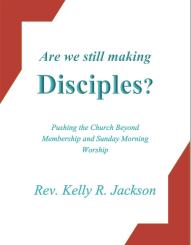
Read an excerpt from “Are We Still Making Disciples”: “Think outside the box, but not outside The Bible”


fullsizer.jpg

Think outside the box, but not outside The Bible

So many of the rules of the church have been loosened because we want to seem welcoming to an ever growing segment of society that doesn’t see the need in physically coming to church. While I understand that we need different methods in a different world, there are some things about the church that should be non-negotiable.

I once preached a sermon entitled “When Jesus Is Your Draw”, taken from Luke 5:1-10. In the text, Jesus goes out into the boat with Peter to catch fish. Peter had gone out the night before, as he explained to Jesus, and had caught no fish.

However, even after explaining to Jesus that the fish weren’t biting, Peter says to Jesus, “Nevertheless, at thy word I will let down the net”. Once Peter followed Jesus’ instructions, he caught so many fish that his boat couldn’t hold them. There were so many fish that the text says his net broke and he had to call another ship over to take in the overflow of fish.

The text also states that there were so many fish that both boats begin to sink. However, what I always noticed in the text was what didn’t happen. While the net was broken and the boats began to sink, nowhere in the text does it say that any fish got away. Peter had gone back to the same place that he had gone the night before to catch fish, but to no avail. The difference was that Jesus was now in the boat. After this, Jesus told Peter, “From henceforth, thou shalt catch men”.

This text is a great lesson in what we as disciples need to draw people. All we need is Jesus. We’re in a day and time where we’re “marketing” the church in an effort to reach a new generation. I have no qualms about this as this generation responds differently than generations past. You have to reach them through their phones, either by text or social media, and you must do so in ways that grabs their attention.

I’m very active on social media platforms and I use them to promote books, ministry events, and I even post a live video feed from the studio during my radio broadcast. There’s absolutely nothing wrong with different methods to draw people to church.

Where I have a problem is when Jesus comes up missing in the marketing plans. Where I have a problem is when we’re promoting services, but we aren’t promoting the Savior. Jesus is the center of the church, so how do we expect to make disciples of Christ, without promoting Christ?

When what you used to do doesn’t work anymore, you have to come up with a new strategy. Yes, believe it or not, there is a strategy to discipleship. When Jesus sent His disciples out in the 10th Chapter of Matthew, He didn’t do so without giving them instructions. He told them what to do, how to do it, and He even told them what their demeanor should be as they did it. Yes, God is intentional!

However, in the midst of new strategies and new approaches, we can’t water down the Word of God or Jesus in the process. No matter what our approach is, it must be centered on The Word. No matter what we’re doing to grab people’s attention, we must always make Jesus the center of attention. We can think outside the box, but we should never think outside The Bible. If Jesus isn’t the draw, then what we’re doing is in vain.

The world has convinced us that crowds matter when we’re putting on a program. Where we used to believe in “where two or three are gathered”, we now don’t believe it’s worth it unless there are two or three hundred. We’ve been convinced that the flyer can’t be too churchy, or the wording can’t be too Christian. We have buzz words like “fire”, “anointing”, and “breakthrough” that causes people to run to our churches.

We make sure that we have the praise team or the preacher of the moment. In the name of creativity, we do all that we can to draw people to our flame. However, when you’re doing something for The Lord, the who and the why are always more important than the number of people that show up.

No matter what program we put on in church, there ought to be three objectives:

  1. Glorifying God
  2. Getting someone saved
  3. Keeping someone connected to God

I know we like to fill the room, but our main objective should be filling the people up with Jesus. Again, this isn’t to disparage anyone that’s looking for creative ways to fill up the church. In fact, I encourage every church to have some sort of marketing plan that targets the people that are current members (we can’t be so concerned with the fish we don’t have that we neglect the ones that we do), as well as the people that you’d like to see at the church. The point here is that Jesus must still be the main reason we do any of it.

As we see in that Luke 5:1-10 text, when we take Jesus into the world, even in places where we were once unsuccessful, He draws where we once failed. And He’s so powerful, that even when we fill up our churches and people begin to overflow, because He’s the draw and He’s what people came for, no one will get away.

When we make Jesus the center of any program that we’re putting on, we are fulfilling our purpose as the church. When we draw people to Jesus with Jesus, they will stay because of Jesus.

Whatever we do in the church must begin with The Bible. When we come up with ideas, we should ask:

  1. Is this Biblical? – Are there any Scriptures that supports what we’re doing, why we’re doing it, and how we’re doing it?
  1. Who’s getting the glory? – Is what we’re doing lifting up the name of Jesus or our particular ministry, our cause (if the cause isn’t Christ), or even our invited guests?
  1. Is there an opportunity for someone to be saved? – This is beyond simply opening the doors of the church. Is what we’re doing actually being done to draw people out of the world and to Christ?
  1. Does it point to discipleship? – For those that are in attendance that are already saved, will it cause them to go out and witness to someone else about Christ or just witness about the event?

I know this may seem a little stuffy to some people, and maybe we’ve gotten to a point where we believe we don’t have to mention the name of Jesus every time we invite someone to our church. But if you don’t want to mention the foundation of the church in what you’re doing in the church, supposedly for the church, then one has to wonder if any of it is really about the church. If Jesus isn’t the draw, then what are we really doing?

If we really want to fill the church, there are some tried and true methods that we can use that will ensure that the people that are coming are there for the right reason. Evangelism still works. Witnessing still works. The testimony of your personal life when you’re in the world still works. But no matter what the method, we should all be doing as Peter did. We need to get Jesus in the boat, or in the case of our discussion, in the marketing plan.

Then, we need to develop a nevertheless spirit. Maybe we tried some things the old way and didn’t get the response that we wanted, so then we have to ask ourselves, did we drop the net on our word or on the word of Jesus?

By simply obeying what Jesus said and when He said it, Peter did what he always did when fishing. But when he did it at the command of Jesus, the outcome was completely different. If we’d only follow His Word, we’d catch more fish than we could hold.

***

To order your copy of this work, click here! To download an eBook version, visit Amazon.com!

Stay in your lane: Don’t focus too much on “the Joneses”

FullSizeRender (4)Everyone that appears to be ahead of you isn’t necessarily winning. This is one of the things that we need to understand in life. We’re often looking ahead, around, and behind us, when our primary responsibility is to run the race that God has designed for us. It is not our call to be overly focused on the apparent successes or supposed failures of others. Just do you, and all that God has promised will come to you.

Let me try and make it a little plainer. The only way for you to lose the race that God has for you to run is if you don’t do what you’re supposed to do. No one can beat you. No one can stop you. That is, no one but you. You have a specific duty and it’s all in your lane. If you stay focused on that and stay the course, God will cause you to triumph!

Focusing on those ahead of us can be misleading. There’s nothing wrong with having good, sound, accomplished mentors that have blazed the trail before you, but not everyone is doing as well as you think they are. There are people that are running ahead of you, and they’re running quite fast, but they’re also running towards destruction. Without having all the information that’s present in their lane, you could unnecessarily speed up while trying to keep up, and crash into a coming hurdle that God intended for you to jump over with ease.

Conversely, you must consider the example that God is setting through you. There’s someone running behind you. Not because they’re slow, not because they’re failing, and not because they don’t have the skills that you have (sometimes, they have more). There are some people that are running behind you just to see how you’re running your race. They’re taking notes. They’re learning from you. God may in fact be using you as a standard bearer. Are you running properly? Are you at the right pace? How are you handling your hurdles? Are you properly positioned in your own lane?

I’ve noticed that God has given me a very unique ministry. I don’t preach the same as others (I don’t have a “Baptist sound”), I don’t teach the same as others, and much of what I do in ministry outside the pulpit was established before I was ever licensed, which caused skepticism because people often put more stock in titles than they do in content. But I also believe that by answering my call later in life, I’m better able to handle the uniqueness of the call.

At this stage in my life, I have a better understanding of how a sense of competition doesn’t belong everywhere in life. This is especially true in ministry, where our primary goal should be leading others to Christ, and not trying to outdo one another. Because of the perspective that I have, I’m able to just do what God has called me to do. I can write as He inspires me, teach and preach as He inspires me, and walk in what He’s called me to walk in, without ever feeling inferior because it’s not quite what others do in their lane. But more than anything, because I’m unique in what I do, it helps me to appreciate the beauty in what my co-workers in the vineyard do without ever feeling the need to change or to try and change them.

I know the grass often looks greener on “the Joneses” side. They’re jobs seem better, their ministries seem to be flourishing a bit more, they even seem to have better friends than you. But just remember, as you run your race, all that glitters ain’t gold. People have become quite good at imagery these days.

At the same time, some people are doing exactly what it looks like they’re doing because God has called them to greater heights and platforms. But before you go aspiring to that, you must understand that there is also a greater responsibility there as well. While understanding that sometimes everything isn’t what it seems to be, we must also remember that we aren’t in some lanes because we can’t handle it.

“The Joneses” may be miserable or they may be as happy and accomplished as they appear. Pray for them and wish them well in whatever they choose to do. But don’t let it distract you from what God called you to do. I call it snowflake ministry. We don’t all look the same, but when we all get together, what a beautiful sight it can be. All we have to do is what we’re designed to do. And to get to the well done line, we can’t be overly concerned with any other lane but our own. Don’t press toward any mark. Press toward the one that God has set before you.

Have you considered the tree?

FullSizeRender (4)Nobody questions the tree. How it came to be, what it endured during its growth, or what it takes for it to maintain. You just know a tree when you see one. You have no idea what it took growing from a seed to the tree you see before you. You have no idea about the storms it has endured, limbs being broken away by strong winds that would’ve taken down a lesser tree.

People carving names and symbols on it, things that don’t represent who the tree actually is, but now it’s branded forever. Cars crashing into it, damaging its bark, and yet the tree is often left to supposedly heal itself (but we know that God is the healer). Dogs doing their business on it, and yet the tree continues to stand, renewing its leaves every year.

The message here is very few people will actually witness your growth, but that doesn’t change who and what you are. Many have enough vision to know that even though they didn’t witness the growth, their eyes aren’t deceiving them. You are what you are, whether they want you to be or not.

At the same time, some people know exactly what you are, they just refuse to respect it. They will brand you with names. They’ll dump on you. They’ll mercilessly crash into you and then blame you for being where you’ve always been, doing what you’ve always done. They resent you being in your calling! They’ll even desire to cut you down and cast you into the fire.

But don’t be discouraged! You are what God called you to be. Even when people don’t understand how you came to be, even when they didn’t witness your evolution, even when they wish to uproot you in the name of new development, stand strong. Just as God created you. He planted you and He will allow you to continue producing in your season.

“He shall be like a tree planted by the rivers of water, that brings forth its fruit in its season. Whose leaf also shall not whither; And whatever he does shall prosper.” – Psalms 1:3

The church is not a destination, it’s a launching pad

Rev JacksonWhat I find most fascinating about the growth of the church in the Bible (Acts) is that it was never accomplished be people that stood still. As Jesus gave His disciples that Great Commission (Matthew 28:19-20), the operative thing for them was to be mobile. They couldn’t spread the Gospel standing still. They were to tarry for the Holy Spirit, but once the Spirit came (Acts 1:8), they were to get moving. If this is in fact the mandate for Christians (followers of Christ), why are we fighting so hard to stand still?

As I look at the state of some churches today, particularly those without pastors, it seems to me that the Commission has become less important than the building itself. There isn’t as much emphasis on who’s getting up out of their seats and taking the Gospel out into the world as there is on who’s sitting in what particular seat within the church. We’ve forgotten that the church was never meant to be a breeding ground for people that want to stay seated and maintain control of the building. The church is supposed to make disciples that are willing to go.

So how did we get here? Well, it isn’t any one person’s fault. We as a congregation of believers lost sight of what is important. Those that are in leadership became more enamored with what they were doing at home than what they were called to do in the world. Pastors have decided that building bigger churches is the answer to drawing more people, as opposed to making disciples that can go out and draw (sheep will get other sheep).

We’ve placed people in key positions in our churches that don’t do much more than Sunday morning service, so they don’t know the value of ministry away from home. As churches, we’ve focused more on insolation and isolation than we have on exploration, exclamation, and salvation. That mentality is counter to what Christ Himself told us to do.

Don’t misunderstand what I’m saying. It’s imperative that we take care of church business, but we should never do so at the expense of or in place of God’s business. What we’ve failed to realize is that just because we’re taking care of something in the church, that doesn’t necessarily make it God’s business that we’re handling. God’s primary business is salvation. God’s primary business is drawing people to Christ. This isn’t done in business meetings. It’s done through preaching, teaching, and evangelism. And contrary to popular belief, you don’t need a pulpit or a church building to do either of these things.

When the Word of God takes a back seat to our personal interests in the church, we cease to prepare people for discipleship. Our membership becomes afraid to invite people to church because an argument might break out or the Word isn’t going forth. Opportunities to save souls fall by the wayside because every attempt at ministry is thwarted by “business” and “protocol”. And if teaching is secondary, knowledge is as well. You can’t teach what you don’t know, and you can’t learn what’s not being taught.

If any church is more concerned with who’s in charge than who saves souls, it is in fact a church that’s in peril. It’s human nature to want to be in charge of everything, but it’s spiritual nature to know who’s in charge of everything. Many will come into church and say “This is God’s church”, but very few understand what that really means.

For example, there’s a difference between natural leaders and spiritual leaders. One is good for the world, and one is good for the church. Knowing God gives you the discernment needed to tell one from the other and would eliminate the need to ever argue about what should and shouldn’t be in God’s church.

As our churches have changed, we’ve become more focused on who we can mold into the spiritual leadership that we feel we need, and less focused on making the disciples that the world needs. We’ve forgotten that God will choose His own leaders from those that are converted by looking at their hearts. We’ve forgotten that when we’re in the Spirit, we don’t choose leaders, we simply agree with whom God has already chosen.

We’ve forgotten that we should be launching people into the world that love Christ rather than trying to turn into the next megachurch, turning out the next “hot” preacher, or having the best praise and worship team. The world needs Jesus, and we can’t give it to them if we’re so focused on who’s running the show. We can’t give it to them if our only purpose is to grow membership instead of helping people to grow spiritually.

I’ve heard it said that pastors are CEO’s, but I don’t agree with that. CEO’s make business decisions, but the church is not an organization, it’s an organism. It’s people working together for the cause of discipleship and Kingdom building. A pastor’s primary job is to feed and lead as inspired of God, not control, staff, and promote according to his own wishes. He is supposed to be more concerned with what’s profitable for the souls of the people than he is with financial profit and loss.

Pastors have begun making disciples for themselves and not Christ. The loyalty of the people belongs to man, not the Son of Man, and this has harmed the local church, and we should all be concerned. As I said in a recent lecture, the people should never quote their pastor more than they quote God’s Word. I’m instantly leery of people that love the building more than they love the Builder. I’m concerned when our churches are filled with people that covet a financial report more than they covet Psalms 51:10-13. When we’re more concerned with where we sit than whom we serve, it should give us all pause.

The reason we’re fighting so tough for the control of local churches is because we’re trying to find a place to be seated. Whether those seats are in the pulpit, on a board, or even our favorite pew, we care more about our place in the building than we do our place in the Kingdom. But true disciples are always on the go. They don’t come to church to take a rest. The come to church to be recharged so they can go back out on a mission once again.

Church was never supposed to be a place where we hurry to get there so that we can hold our spot. It was never supposed to be where we land, but where we launch from. It was never meant to be a social club, but rather where we gain the spiritual social skills to reach others. If we aren’t developing these traits in our churches, we’re either in the wrong place, or we’re the wrong people.

In search of the Holy Ghost “push back”

cropped-20130824_22091611.jpg

I only need three minutes of your time.

There’s a serious issue plaguing the local congregations. Because of this issue inside the church walls, we’ve become ineffective outside of them. Many of our communities are dying around us, and we in the local congregations are failing to do anything about it. Why? Because we’re too busy trying to kill one another inside the walls of the church.

This past weekend, our Sunday School lesson was on spiritual deliverance (Luke 8:26-39). When giving the minister’s remarks on the lesson, I stated that we in fact have many demonic spirits within the congregation that keep us from ministering outside of it. But they aren’t just spirits that are only in what we perceive as “hell raisers” in our local churches.

They’re also spirits in anyone that would seek to push hell raisers out of the church into the wilderness, rather than try and rid ourselves of the spirit that’s infected our church, while at the same time looking to save a brother or sister that may be under the influence (James 5:19-20).

2 minutes left.

Here’s what we need to know: Hell raisers are always in attendance because demonic spirits transfer (study that Sunday School text I gave). They’re dedicated to their cause because the one that influences them never takes a day, hour, or minute off.

They’re always on time, they’re always together, they’re always loud, and they always state their position. And as members of the congregation, they have the right to do so. They’re at every meeting, every get together, and every function, and they make their presence known. Even if they don’t win, you will know that they were there. It’s their opposition that’s having the trouble.

Those that oppose this spirit are too meek, too passive, too quiet, and too afraid to speak in hostile situations. They’re living their lives on hope, but not a hope that produces action. They’re being pushed, but they’re unwilling to push back.

Now understand that being “holy spirit filled” is having the ability to give the benefit of the doubt. You’ll never convince me that you’re spirit filled if you can’t do two things:

  1. Not be so ready to believe the worst that you hear about people with no real proof.
  2. Even if you know that the worst is true about the individual, you believe that God can change them.

If we really and truly want to come together, at some point, we’ve got to be more willing to trust God for real change, and less willing to base all that we are on what we feel and past events. Because that’s what spirit filled people do. They accept the fact that the worst of us can be redeemed. But that requires activity. It requires prayer. It requires forgiveness. It requires restoration. And it requires resistance to those spirits that can cause us to believe that unity can only happen on our terms.

1 more minute.

So what is the benefit of a Holy Ghost push back? When we push back spiritually, we let the enemy know that we value unity more than we do confusion, and we show that by speaking out against what’s dividing us. We let the enemy know that we care for one another more than we do our position in the argument. We let the enemy know that we care more about being right with God than we do about winning an argument. We let the devil know that we need healing inside the congregation before we can go out into a sick world and show them what healed us.

Isaiah 54:17 tells us that no weapon formed against us shall prosper, and every tongue that rises against us in judgement, WE shall condemn. This not only means that the attacks of the enemy will fail, but it also means that we have the right to speak against the attacks. We can no longer keep silent about the dangers in the world, but we can’t help any of that if we refuse to speak against the dangers right at home.

I challenge anyone that’s being overrun by demonic spirits within your local congregation to spiritually push back. Not against the individuals that may be affected, but against the behavior. Push back against opposition that exists for the sake of opposition, and not for a defined principle or ideal, backed by Scripture. Push back against that spirit because that’s your true enemy, not the person you’re focusing on. Meek doesn’t have to mean weak. Find your push back!

Excerpt from “Going Through to Get Through”

Read an excerpt from Rev. Kelly R. Jackson’s latest book “Going Through to Get Through: Activating your faith during life’s most trying times”.

BookCoverPreview (2)Taken from the chapter:
“The challenge of God’s timing: Working your way through the wilderness”.

Available March 1st!
Order now $12.99
Buy Now Button


What are you waiting for?

When we’re trying to answer the question of why God brought us to a particular place, we must first examine ourselves. It’s so easy to begin questioning God and asking Him why we’re in a certain place or what we’re supposed to do now, but the first questions belong to us.

God may have in fact pointed us in a certain direction, but did we take the route that He told us to take? Did we go through the people that He told us to go through, or did our pride or our feelings about that individual cause us to use someone that God hadn’t authorized?

Did we commit to the vision that He gave us, or did we alter it? Most importantly, when we received that vision from a holy God, did we alter our living to coincide with living out the promise given to us by a holy God?

When you examine those questions for your own life before questioning, or even blaming God for why you have to wait in the wilderness, you may in fact find that it was never God’s plan for you to wait. Know that God’s blessings on your life aren’t yours no matter how you’re living.

When you ask God for a blessed destiny and He agrees to give it to you, you can’t continue on living however you want. God expects us to live up to the call and the blessings.

Also, you may find that it was God’s plan for you to go through some trials so that you might know that He delivered you, and so that you can appreciate your blessings when you reach them. All that you’re doing may have been designed for you to exercise your faith and for you to grow in that faith.

Consider again the Children of Israel. God could’ve made a way for Moses and the Israelites to escape captivity without ever having to confront Pharaoh. But by having to deal with Pharaoh head on, all were able to see that God’s power can deliver us without us ever having to cower in the face of those that wish to oppress us.

When they crossed the Red Sea, it wasn’t God’s desire for them to spend 40 years in the wilderness wandering. The journey from the wilderness to the Promised Land would’ve normally taken only a few weeks. It was their disobedience and lack of faith that kept them from reaching their destination sooner.

God’s promises to us are real, but we sometimes need to evaluate our commitment to God. There are times when we’re more committed to the promise than we are to the God of the promise. We want to go from point A to B, but God may want to add a few more letters to the equation.

God sometimes wants to refocus us on why it is we started out. So often we’re in this wilderness state looking to God and asking “What’s the holdup?” In the meantime, God is looking down at us and asking the same question.

There are times when God will slow progress because we’re moving in the wrong direction, or we’re moving in the right direction, but we’re skipping steps. There are also times when God will stop progress because we’ve stopped progressing. As we’re waiting patiently in the wilderness, we must also remember to wait FAITHfully!

We must remember to never give up on God just because traffic has momentarily stopped. There’s a plan, a path, and a purpose. But if you’re not moving, don’t always assume that God has stop working on your behalf. Sometimes, we’ve stopped working on His behalf. Sometimes, all you’re waiting on is you.

Isolation for elevation

Whether you’re in favor of the wilderness or not, you must understand that it’s all a part of God’s plan. It may not feel like it, it may not look like it, and it may be counter to what you thought God promised you, but know that it was always a part of God’s plan for us to be isolated before we’re elevated. This time of consecration is necessary if we’re to be what God would have us to be at the next level.

As God looks to shape and mold us into what He wants us to be, we must also understand that there is some reshaping that must go on as well.

So those of us that are passionate, but only passionate about sinful things, God wants to redirect our passion, not take it away from us. For those of us that are intellectuals, but only for worldly causes, God needs our intelligence, but He needs it focused on Him.

Those of us that are talented and gifted, but have used those talents and gifts for the world, God doesn’t want us to lay our talents down, He just wants us to use them for His glory.

When we come to God from the world or from a place where we weren’t in His service, we must understand that we have some things on us that must be removed. We have some habits, some ways, some addictions, and some behaviors that are not of God. Before we can truly be used for God’s purposes, these things have to be stripped away.

The easiest way to stay in a rut is to stay in the place that got you stuck. So when God calls us up and out for greater service, He’s going to call us out of the rut of former friendships, former family relationships, former jobs, former romantic relationships, and even former church relationships.

When He isolates us in the wilderness, He’s taking the time to strip us of all of our old allegiances in order to form some new alliances. When God is taking you to something new, you can’t be beholden to what’s old. Sometimes God has to break us apart in order to remake us into what He wants us to be.

When those Children of Israel had been in captivity all of those years, as much as they loved God, they had still taken on some characteristics of their oppressor Egypt. It’s been said that it took one night to get them out of Egypt, but it took 40 years to get Egypt out of them.

When we’ve been living in the world, following the edicts of the prince of darkness, we have some stuff on us. God can’t just elevate you to a Promised Land or a holy position just as you are. He’s got to have some alone time with you so that He can shape you into a vessel that He can fill, so that you may pour out into others.

Things I learned at church…

Rev JacksonSooner or later, we in the church will have to take responsibility for what we’ve done to influence the negative behavior of the world. Didn’t expect that from the Reverend, huh? Yes, we often talk about how worldly ways are creeping up into the church, and that’s very true and it’s a very real issue. However, we often fail to realize that we’re doing damage to the world as often as they’re doing damage to us. The world may not be fighting us as much as they’re fighting us back for what we’ve done to them.

The church used to be a symbol of peace, love, hope, and salvation for the wayward souls of the world. They knew where they were wrong, but they saw us as the hope that they could one day get right. But we’ve changed. We’ve blurred the lines. We’re not what we used to be. We beat on them as much as the unsaved does. We’re no longer doing the missionary work we’re called to do. Our most active auxiliaries now are The Complaint Board, The Backbiting Board, The Judgment Ministry, The “I Won’t Forgive Or Forget” Team, and The “You Ain’t Been Called” Outreach Program.

It’s true, some of the worst behaviors we’ll ever learn, we’ll learn in the church. We’re overly concerned about the world coming in and tainting us, without realizing that we’re already tainted. We shouldn’t fear the world coming in because that was actually God’s plan. What we need to do is better prepare the people that are a part of us, so that they’re able to receive the world when they come and impart Christ onto them, instead of teaching them how to fight people by using a few scriptures that they’ve memorized, but don’t understand.

With that being said, here are seven things I’ve learned from “Christians” during my 40 plus years in church. See if you can identify:

1. Some people will only follow a leader if they can lead them – In a place where leadership is desperately needed, it appears that many are actually looking for glorified sheep of their own. The problem is everyone’s an expert, but never a student. They claim to want leadership that will listen to their concerns and guide them, but what they really want is someone that they can control. And in the event that they get a leader that they can’t control, they assume someone else is controlling that person. It couldn’t be that this person is following God’s orders, and those orders just happen to be contrary to their thinking, oh no. As I’ve always stated, those that plot and scheme will always assume that everyone is plotting and scheming. I submit to you that sheep need a shepherd, and if your leader is following you, you’ll both end up lost because you’re both sheep.

2. Those that contribute the least will always have the most to say – Have you ever been having a political conversation with someone that has all of the answers for the country, but they’re not a registered voter? They give you excuses like “my vote won’t matter” or “it’s all a conspiracy”. Then why are you here in America? Why are you complaining? Church is no different. The people that contribute the least in church, whether it’s time, effort, or money, are always the ones filled with suggestions and complaints. They’re the first to tell you what to do with an account full of money that they’ve contributed little to nothing to. They’re just like people that don’t wanna pay taxes, but somehow expects the government to take care of and protect them. Which leads me to my next point…

3. People will only work when conditions are “ideal” (Which means they’ll never work) – There are people in church that will tell you that the only reason they won’t work or contribute is because “things aren’t right”. But once they do get right, they’ll jump on board. What they’re really saying is “I want it done my way and I work when I want to, not when the church needs me”. But when are conditions ideal for discipleship? When people sought to be disciples of Jesus (Luke 9:57-62, Matthew 8:19-22), He explained to them that conditions aren’t always favorable. He told them: “Foxes have holes, and birds of the air have nests; but the Son of man hath not where to lay His head”.

There is no comfortable way to serve God. It’s hard work, but the pay is out of this world! If the church must be perfect for you to work in it, I gather that you’ll never do a thing of substance there. The church doesn’t need workers to keep it perfect, it needs workers because it’s perpetually imperfect. As Jesus ended that discourse on discipleship, He said: “No one, having put his hand to the plow, and looking back, is fit for the Kingdom of God”. If God isn’t worth the sacrifice, especially when things aren’t perfect, then you aren’t worth the Kingdom.

4. Forgiveness is sometimes just a word. Some people stay mad forever and ever! – For a group of people that have been saved by a graceful and forgiving God, we sure are on short supply of forgiveness. We say we’ve forgiven and are ready to move forward, but no church member is really ready to move forward if they’re standing still (see previous point) while talking about the past and old issues. True forgiveness is about disconnecting from the past so that you can move forward. However, the first time something happens that we don’t agree with, we connect it to a 20 year old issue that we’ve allegedly let go of. There seems to be no such thing as water under the bridge. We assume that talking about it doesn’t mean we’re not over it, but I challenge that theory.

For example, if someone broke your heart years ago, but you rebounded nicely into a nice marriage with the love of your life, you don’t spend all of your days talking about your ex. You’re over it and you’ve moved on. That’s forgiveness. You remember what happened, but you don’t waste time talking about it anymore because you don’t want it disturbing your peace. You remember the pain it caused, but you’re not hurt anymore. That’s healing.

Scripture tells us that death and life are in the power of the tongue (Proverbs 18:21), and the reason some issues won’t die in the church is because people keep bringing them back up and implanting them on a new generation of believers. I submit to you that if someone joins your local church and you feel it’s your job to tell them who to “watch out for”, if you mention anyone other than Satan because he’s not pleased that they’ve turned their life over to Christ, you have unresolved issues and the person they really need to watch out for is you.

5. Everyone’s a witness, but no one’s a criminal – Speaking of forgiveness, isn’t it strange that sometimes in church, everyone is owed forgiveness, but no one owes? We all know who messed up things in the church, but we fail to see our hand in it? Never realizing that even inactivity can be sinful if you know what’s right and did nothing to confront wrong (Luke 12:48). We saw what everybody else did, but it would take an O.J. Simpson-sized trial to convict us, and we’d still expect the glove not to fit. We’re so aware of everyone else’s shortcomings, but are surprised to find out that we’re guilty too.

Even as I’m writing this piece, I have my faults just like everyone else. Scripture tells us that we’ll often look past our greatest sin to see the smallest fault in someone else’s life (Matthew 7:3-5). But how much stronger would all of our churches be if we just took care of the wrong in our lives? If everyone on the block maintained their own lawns, we’d live in a beautiful neighborhood.

6. Anyone that disagrees with you is an enemy – Disharmony doesn’t come from disagreements alone. It comes from people’s inability to accept the fact that they’ve been disagreed with. Church folks are the worst at this. They fear individual thinking. They see every dissenting opinion as an attack on their own intelligence. Heaven forbid that someone has a differing point of view.

No one has ever grown without someone else challenging their thinking on their most dearly held beliefs. Even if you never change your mind and come to agree with the person disagreeing with you, it should force you to strengthen your argument. It should force you to further research your position to find out why you feel the way that you feel. And if you find out you’re wrong, you should be strong enough to own that and change.

When you have close relationships, especially the ones we should have in the Christian community, you should be able to handle a difference of opinion here and there, even if it becomes heated because we’re passionate, without having to promise to be mortal enemies afterwards. More than anything, we have to accept the fact that there’s a difference between what’s right, what’s wrong, and what’s opinion. Right is right, wrong is wrong, but an opinion is how I feel about it. And we all have a right to one.

7. Many have scripture in their heads, but not in their hearts – Herein is the crux of the matter. All that we have discussed here is a matter of scripture. Not just the memorization of scripture, but the application of scripture. Even good, well-meaning Christians struggle with this one. Many people in the church can tell you what the Bible says, but they can’t always show you how they’re living it. Bible class is still the least attended of all services in the church, and that’s true no matter how large or small the congregation is. And that’s not the fault of the church (unless it’s not offered), it’s the fault of the Christian that refuses teaching.

Consider how we learned the secular songs that we love. Once we’ve committed to them, we learn them “by heart”. It’s written in our hearts to the point where if we hear a song that we grew up on 20 years ago, we not only know all of the words, but we remember all the dance steps that went with it. We don’t blandly recite them without feeling either. We apply them with emotion. The memory of such songs elicit a response. Scripture should be the same way. We shouldn’t repeat scripture without a desire to act something out. Knowing scripture is important, but living it out brings about a change in your life.


What we learn in church determines how we affect the world around us. We can’t show love in the world if we can’t show love to those that we call brother and sister. That’s even true in a secular sense. If you don’t have a sense of love for those that you call family, those outside the family have no chance. If we really want to know why the world is bringing a lack of love into the church, it may be because we keep sending people that lack love out into the world.

So what have you learned in church? That’s a rhetorical question that begs for an answer. We must remember that some of the “messed up” people in the world got messed up at church. The feeling of superiority of a few people that know a few scriptures and give a few dollars in church, but have issues with everyone in the church because they don’t live the love they claim, is crippling us.

We can no longer allow just anyone to be our voice, whether inside or outside of the church. “Jesus is the head of the church” is just a catchphrase for some people, not a mandate. There needs to be a new shift. And much of the negative that we’ve learned in the church needs to be unlearned for our own sakes.

Everybody’s seasonal: Lessons for 2016 and beyond…

2016-new-year-ss-1920I’m guilty. I was one of those people. Always at the end of the year, threatening to kick someone out of my life. Claiming new change for the new year. Making my list and checking it twice, and if you didn’t fit in, you can get out. It seems like a wise thing to do, especially in the name of self-improvement. But there came a day when I took a long look at this practice and found that not only was it unnecessary for me to even try to do such things, it’s not even my business. Let me explain.
First, let me state that we don’t need a lot of resolutions. We simply need resolve. Stop looking at the calendar as an indication of when you should change. Change when you feel the need to. January 1st isn’t some magic day. I know the feeling of newness hits us all, but that same feeling would hit you in the middle of June if you saw a need for change, made the change, and committed to it.

Also, I contend that we don’t need to choose our circle as much as we need to cultivate that which God has chosen for us. God has promised to direct our paths (Proverbs 3:5-6), so He will lead us into those places that He would have us to go, around those people that He would have us to be with. If you’re in the wrong place, He’ll make you aware. Not so that you can remove someone, but so that you will know why He’s about to.

In the Christian community, we sing songs like “I Give Myself Away”, where there’s a portion of the song that goes: “My life is not my own, to You I belong, I give myself, I give myself to You”. If this is in fact truth, how are we making decisions on who stays and who goes? If your life belongs to God, then He makes the decisions on who belongs in your life.

Now, I know the thought here is going to be “Rev. Jackson, don’t I have to make some decisions about who I should and shouldn’t associate with?” Yes, you do, and I believe that God does lead us to certain decisions. However, what I believe more than anything is that God changes us first, in order to change our surroundings and our circle of friends.

We’re so focused on who’s in and out of season in our lives that we lose sight of the fact that we can be out of season in someone else’s life as well. We’re so busy kicking people out of circles that we don’t know that there are some circles that we need to be kicked out of too.

Once there’s a difference in how you’re living, you won’t have to get rid of any wrong people in your life. Once they see you going in a direction that they don’t wish to go in, they will remove themselves without any assistance from you. This way you didn’t “kick” anyone out, and there are no hard feelings. You’ve probably recognized that they needed to go, and God moved them away. Most importantly, this leaves the door open for reconciliation, just in case we come back into season in one another’s lives down the road.

If we’d only just remember, we’re all seasonal. No matter how important you think you are, no matter what you’ve done for a person, no matter where you think you fit into their lives, it is only for a season. Remember that as people are passing through your life, so too are you passing through theirs. We don’t like to deal with difficult people in our lives, but their blessing may be tied to their interaction with us. We may be in their lives but for a season, but our impact may be life-long.

I’ve often stated in my writings and my teachings that we should let God be our gardener. We should allow Him to do all of the planting and uprooting as He sees fit. There are times when people are in our lives and we wish they would just go away. But if God placed them there, they must be there for a reason.

Many of us would’ve never learned the lesson of choosing the right friends had God not allowed us to make the mistake of choosing wrong once or twice in life. In the parable of the wheat and the tares (Matthew 13:24-30), Jesus tells us to allow them to grow together, and He will separate them when the time is right.

If we allow God into our lives in that same way, He will separate us from the “wrong” people when the time is right. But don’t be surprised when you look up in the end, and there are some “wrong” people standing by your side, who were supporting you all along. Some of those very people were on your “get out of my life” list, and you were so focused on how God was using you, that you had no idea how He was using them.

I know this thinking isn’t popular these days. We’re so busy taking pride in being some kind of lone wolf that we forget that we need one another. We’re so busy telling folks that all we need is God, while forgetting that God manifests His love for us through others. Social media will have you thinking that everyone is disloyal when they don’t co-sign your every move, when in fact the most loyal people you’ll ever meet in your life are the ones that aren’t afraid to tell you that you’re wrong. They’re the ones that would rather fall out with you than silently watch you make huge mistakes, all in the name of being your “ride or die”.

Seasons change all the time, and some last longer than others, no matter what the calendar says. Our relationships are the same way. Remember that any fruit that’s picked before it’s time can cause illness when it’s consumed. Allow all of your relationships to reach maturity. Even through the growing pains. Even through the difficulties of life. Even when it seems they’ve outlived their usefulness.

We’re all seasonal. Live your life, in your current moment, in this current season. Leave all of the changes to God, with the expectation that He will do something great in your life, while providing the people that you need along the way. And He’ll do it all in due season.

Practicing what we preach: Preachers have a different set of responsibilities, not rules

FullSizeRender (1)One of the great challenges of true leadership is walking the talk. Not just giving instruction, but being willing to follow that which you’ve laid out for others. And in the event that those rules don’t apply to you, showing that you are following the ones that do apply to you. This is especially true when it comes to preaching and pastoring. In fact, we are the basis of that popular phrase “Practice what you preach”. It’s so vitally important that we’re living by that principle because people in their flesh are often unable to look beyond God’s representative and see Him for themselves.

It is through the preacher that many are introduced to God. While we can’t save, we can point people to The One who does. Because of this, our jobs are more critical than any other within the body of Christ (Note: The importance is on the job, not on the individual doing the job). While we have been blessed with such a great call, we have not been given the free pass that many, both within and outside of the ministry, think we have. We have not been given a special rules exemption by God. This responsibility is sacred and it must be treated as such. Though we throw that catch phrase around rather loosely, “Practice what you preach” is probably the most important mandate available for any minister of The Gospel.

The human side of a preacher or pastor can often affect the spiritual call that he’s under. For example, if there’s anything that bothers us on our 9 to 5 jobs, it has to be higher ups operating by a different set of rules. I mean, doesn’t the employee handbook apply to everyone? Don’t we all work for the same company? I know you’ve gotten a few promotions, but rules are rules, right? Well, not always.

If you’re working a secular job for a number of years, you get comfortable. You’ve gotten a few raises, a few promotions, and you’ve got a little seniority. Just as it is on a secular job, the longer you’ve been doing it, the more comfortable you feel cutting corners and not following all of the rules to the letter. Now, if you’re blessed enough to have a few subordinates, you won’t allow them the same latitude (unless, of course, you have some favorites, which we all do). You make sure that the people “working under you” abide by all of the rules as stated. And if you’re ever questioned by them about the obvious double standards, you remind them of how long you’ve been doing this, what your title is, who their immediate boss is, and the fact that you’re in good with the big boss, so you’re privileged. Does this sound like church to anyone yet?

A preacher or pastor can’t in good conscience stand in the pulpit and instruct the people of God in the rights and wrongs of Christian living, and then act as though he is above the law. People in church can spot a hypocrite from a mile away. Even as they say “amen”, they’re still aware when you don’t practice what you preach. In fact, they lose respect for you. Not because you’re not perfect, because they already know that and they’re not afraid to tell you. They lose respect because you’re acting as if the rules don’t apply to you. You lose credibility and the ability to correct them because if you can pick and choose what to follow, why can’t they?

Nowhere in the qualifications for a Bishop (1 Timothy 3:1-7) were we issued a different Bible. The same Bible that applies to the “layperson” applies to the pastor and preacher. We all have the same rules about adultery, fornication, gossip and backbiting, forgiveness, etc. God meant those words for all, no matter what your position in the church.

People are turned off from traditional churches because some of our pastors and preachers act as though they’re above the Bible. But it’s not God that’s behind this elevation, oh no. It’s often man’s ego, coupled with members and their hero worship/groupie mentality. When I published my book “An Understanding with God”, the original premise was dealing with preachers and pastors that behaved as though having a greater understanding of God’s Word gave them leeway that other Christians didn’t have with God concerning sin.

Now, I don’t want anyone to get this wrong. Understand that both the pastor and preacher are under a special anointing from God. They have been called to a greater work. It is a work not to be taken lightly, nor disrespected. The Bible states in both 1 Chronicles 16:22 and Psalms 105:15: “Touch not mine anointed, and do my prophets no harm”. However, those scriptures are in reference to the mistreatment of the prophets, not godly correction. None of us are above that. In truth, the fact that we’re called to a greater calling doesn’t alleviate our responsibility to live according to God’s Word. It increases that responsibility.

Preaching has enough challenges without we preachers acting as though The Word doesn’t apply to us. There’s automatically an expectation of “holier than thou” placed on us as soon as we accept the call. People believe that because we’re preachers and pastors, we’ve somehow been given some supreme ability to avoid sin. They assume that the devil won’t attack us because God is covering us. They began throwing our past around like its current events. They forget our humanity.

While there’s nothing we can do about people’s unrealistic expectations, we can do something about the idea that we don’t have to serve the same God that they do, under the same ordinances listed in His Word. We can be sure that people understand that our call doesn’t make us exempt from God’s orders for the Christian community as a whole. We can practice what we’ve been called to preach.

All of the teaching and preaching that we do on love, forgiveness, keeping God’s statutes, and overall Christian conduct should serve as a reminder to us first, before it becomes schooling or a corrective measure for those we’re charged with leading. Every word in our lessons, sermons, lectures, and Bible classes should sting us first. If we aren’t living what we’re teaching from the Bible, each word that we speak should be a bitter taste in our mouths until we’re trying our very best to do so.

We must remember that we don’t preach so that people can see how great we are, but so they can see how great our God is. We aren’t to preach a word of chastisement with a tone that suggests that we’ve somehow conquered sin. We ought to speak as though we’re beneficiaries of God’s grace and mercy, just like the people we’re speaking to.

This isn’t a call for you to be overly critical of the preachers or pastors that you know (remember 1 Chronicles 16:22 and Psalms 105:15), but you should be concerned when they’re aware of everyone else’s shortcomings, but blind to their own, particularly when they’re obvious. The easiest way to lose people is to tell them to do something that they know you should be doing to, but you’re not. We can’t be “do as I say, not as I do” preachers. We must be a living and breathing example of the Gospel of Jesus Christ, and not just a shadow.